Malta Gaming Licence in 2026: The Complete Guide for Online Casino Players
Ask anyone who works in online gambling regulation which licence actually means something, and Malta comes up within the first two answers. It has for years. The Malta Gaming Authority has built a reputation that most licensing jurisdictions spend decades trying to replicate and never quite manage. That reputation isn’t accidental — it comes from a combination of serious application requirements, active enforcement, and a transparent record of what happens when operators fall short.
For players choosing where to put their money in 2026, understanding what a Malta gambling licence actually delivers — and what it costs operators to obtain one — gives you a genuine framework for evaluating any casino that claims it.

100% first deposit bonus up to £600 + 100 free spins


Welcome bonus up to 550% + 450 free spins

100% first deposit bonus up to £300 + 150 free spins

First deposit bonus 100% up to £500 + 200 Free Spins


First deposit bonus 120% up to £600

100% first deposit bonus up to £500 + 200 free spins
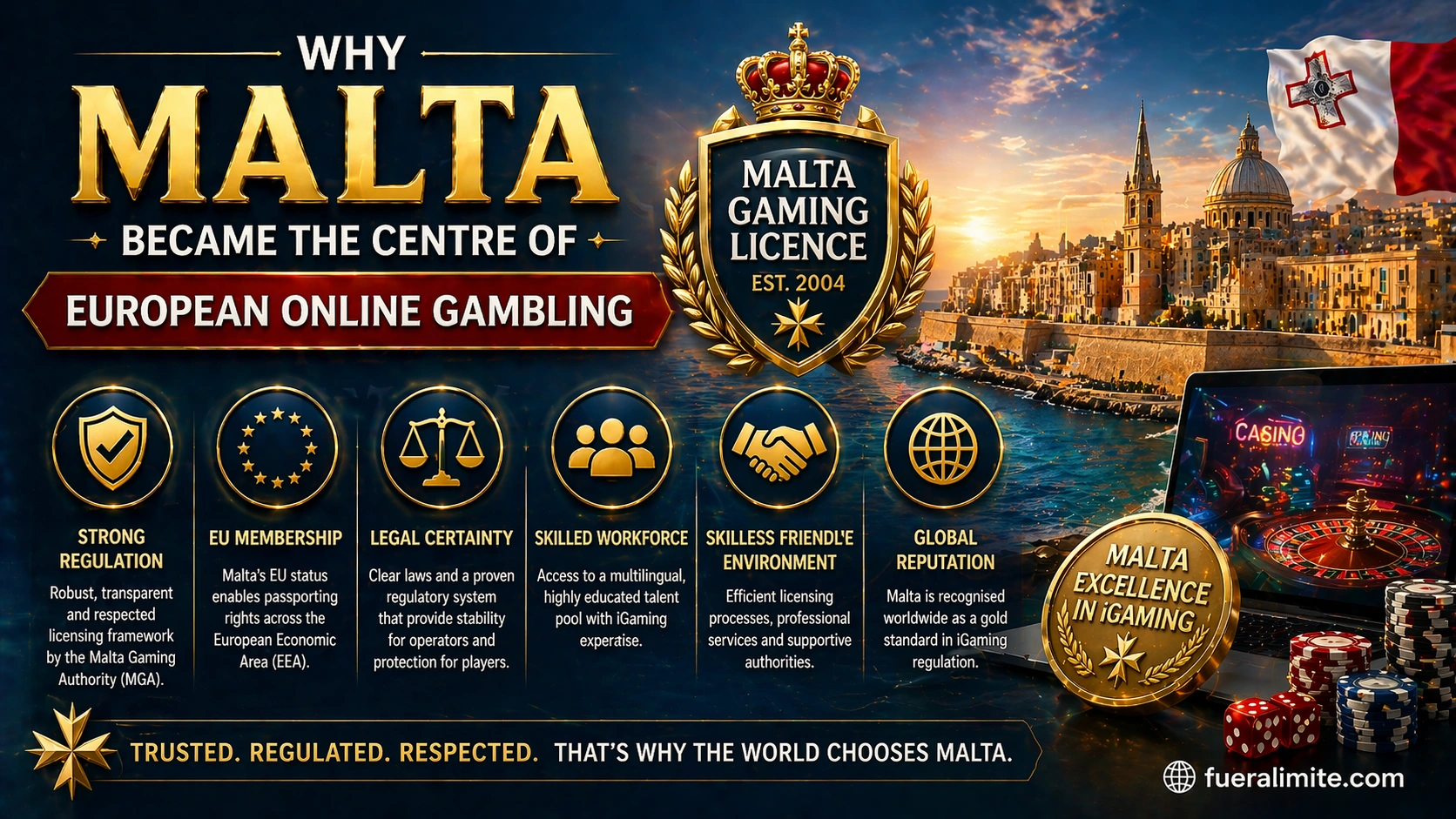
Why Malta Became the Centre of European Online Gambling
The story of Malta’s dominance in online gambling licensing starts in the early 2000s. The island had a few things going for it that other jurisdictions didn’t. EU membership, which meant operators licensed there could argue a degree of market access across European states. English as a working language, which made legal and compliance work easier for international operators. A government that understood the economic opportunity and moved quickly to create a regulatory framework before most European countries had started thinking about it.
The Remote Gaming Regulations came into force in 2004, and Malta became the first EU member state to specifically regulate online gambling. Operators flooded in. The industry grew around the regulatory infrastructure, law firms developed gambling practice groups, compliance consultants set up shop, and Malta gradually became a genuine hub rather than just a convenient address.
In 2018, a significant overhaul of the framework produced the Malta Gaming Authority as the successor to the Lotteries and Gaming Authority, with updated regulations designed to reflect how much the industry had changed since 2004. The 2018 framework is what governs the Malta casino licence today, with further refinements applied through 2024 and into 2026.
What the Malta Gaming Authority Actually Does
The MGA isn’t just a rubber stamp operation. It employs a real regulatory staff, conducts genuine application reviews, runs a player complaints function, and publishes enforcement activity including sanctions against operators that fall short. That combination of elements is rarer in gambling regulation than you’d think.
The Authority’s mandate covers several distinct functions that all affect what it means when a casino holds a Malta gaming licence:
On the licensing side, the MGA evaluates applications thoroughly — assessing the fitness of operators and their key personnel, reviewing financial projections and capital adequacy, examining technical systems for games and player accounts, and assessing AML and responsible gambling frameworks before any licence is issued.
On the supervisory side, licensed operators file regular compliance reports, notify the Authority of significant changes in ownership or operations, and are subject to ongoing monitoring and periodic audits. The MGA can and does investigate operators based on player complaints, market intelligence, or its own supervisory activity.
On the enforcement side, the MGA publishes sanctions on its website. Players and journalists can look up whether any operator has been warned, fined, or had conditions applied to its licence. This transparency is one of the concrete ways the MGA differs from regulatory bodies that operate without public accountability.
The Malta Licence Categories in 2026
One of the aspects of the Malta framework that operators and players alike sometimes find confusing is the category structure. A malta online casino licence isn’t a single document — it’s an authorisation in specific categories that define what the operator can offer.
Under the current framework, the main licence categories relevant to online casino players are:
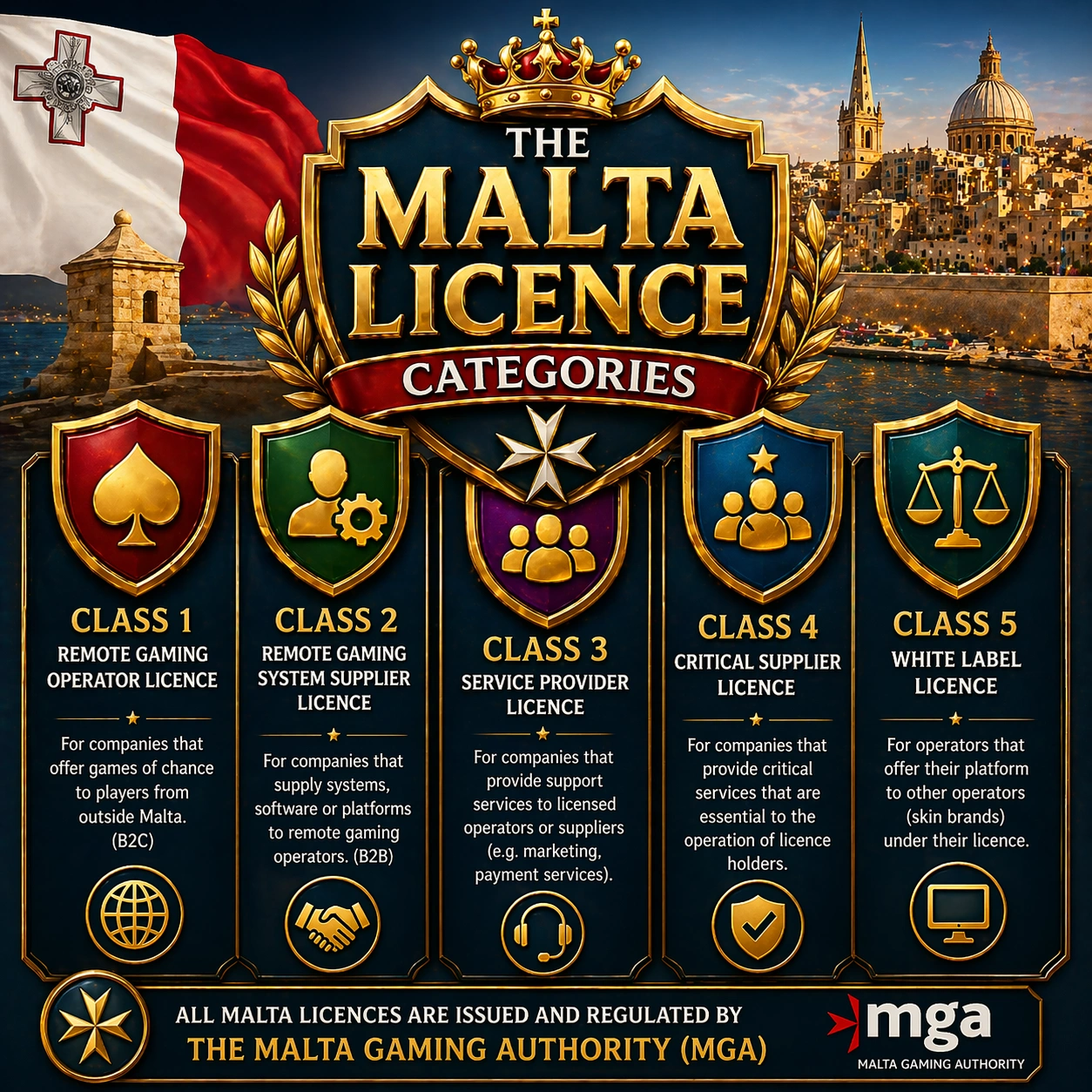
B2C Gaming Service Licence: This is what online casinos hold. B2C — business to consumer — licences authorise operators to offer gambling services directly to players. Within B2C, the authorisation covers specific game types:
- Type 1: Games of chance — slots, table games, roulette, blackjack, baccarat
- Type 2: Games of chance with a player-versus-player element — poker and similar
- Type 3: Fixed odds betting — sports betting, horse racing
- Type 4: Fantasy sports and skill games
An operator must be authorised for each type they want to offer. A casino that offers slots, table games, and sports betting holds Type 1 and Type 3 authorisations under their B2C licence. This granular structure means you can see exactly what an MGA-licensed operator is permitted to offer — which can be useful for verification.
B2B Critical Gaming Supply Licence: This covers software providers and technology companies that supply services to gambling operators. The games on your favourite casino might themselves come from an MGA-licensed software provider — that’s a separate licence from the casino’s own operator licence.
The malta license categories distinction matters because it determines both what players can expect and how verification works. A casino claiming a Malta online gaming licence should be authorised in the game type categories that match what they’re offering.
Malta Gambling Licence Cost: What Operators Actually Pay
The malta gambling license cost is significantly higher than what operators pay for offshore alternatives, and that’s part of the point. The cost structure creates a barrier to entry that filters out undercapitalised or uncommitted operators before they get anywhere near a licence.
Here’s how the cost structure breaks down in 2026:
| Cost Component | Approximate Amount | Notes |
|---|---|---|
| Application fee | €5,000 – €10,000 | Non-refundable, payable on submission |
| Annual licence fee | €25,000 – €35,000 | B2C operator, varies by revenue tier |
| Compliance contribution | Variable | Based on gaming revenue, additional to licence fee |
| Minimum authorised share capital | €100,000+ | Must be maintained throughout licence term |
| Technical audit costs | €20,000 – €80,000 | Paid to approved testing laboratories |
| Legal and compliance setup | €50,000 – €150,000+ | Third party advisors, internal compliance |
| Estimated first-year total | €200,000 – €400,000+ | Varies significantly by operation size |
The malta gambling license cost comparison with offshore alternatives is stark. An Anjouan or Curaçao licence for a first year might run $40,000–$80,000 all in. A Malta gaming licence at the lower end of the range is five times that, and the ongoing compliance costs are proportionally higher too.
What that cost buys — for the operator and the player — is access to a regulatory framework with real teeth. The investment signals that the operator is serious and has the resources to sustain legitimate operations. It’s not a guarantee of good behaviour, but it’s a meaningful filter.
What the Malta Casino Licence Means for Players
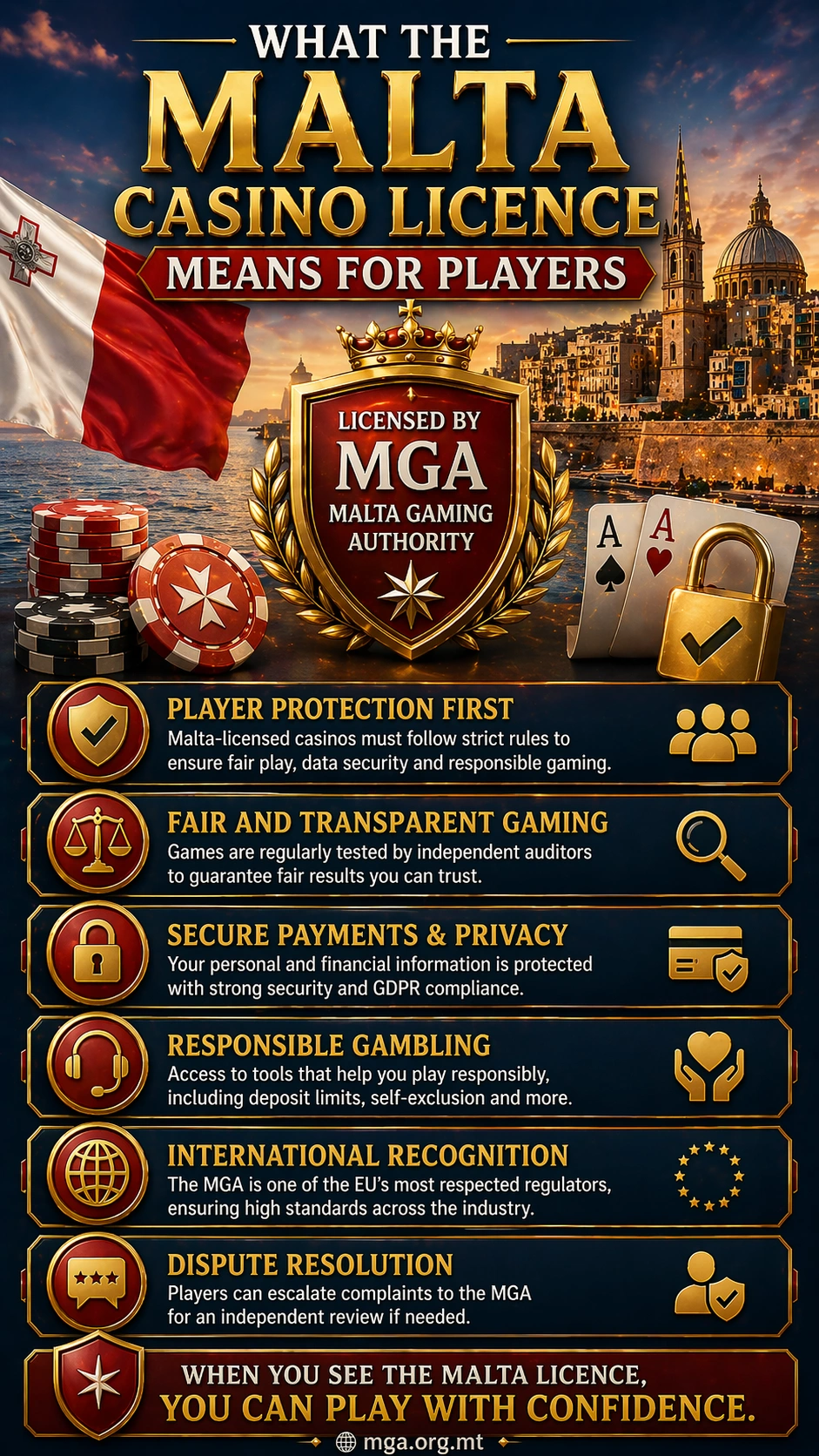
The requirements operators must meet to hold a gambling license in malta translate directly into player protections that are either mandatory or strongly incentivised. Understanding these helps evaluate what you’re actually getting when you play on an MGA-licensed platform.
Certified games
Every game type authorised under a Malta online gaming licence must be certified by approved independent testing laboratories. The random number generators, the stated RTP percentages, the game mechanics — all independently verified before the game goes live. This is the foundation of knowing that what you’re playing works as described.
Segregated player funds
MGA-licensed operators must maintain player funds separately from operational funds. The specific requirements have been refined over successive regulatory updates, and in 2026 operators must clearly document their player funds protection approach. If an operator with a Malta casino licence goes under, the segregated structure is designed to protect player balances.
The Player Support Unit
One of the MGA’s most practically useful features is its Player Support Unit — a formal complaints mechanism that players can access when they have an unresolved dispute with an MGA-licensed operator. The process is accessible, conducted in English, and results in determinations that are binding on the operator. It’s not as fast as some players would like, but it’s a genuine functional remedy that has resulted in players recovering funds from reluctant operators.
Responsible gambling requirements
The MGA framework mandates responsible gambling tools including deposit limits, session limits, self-exclusion, and connection to national self-exclusion schemes where relevant. Operators are required to have responsible gambling policies that go beyond token compliance — the MGA’s enforcement record includes sanctions against operators that failed to intervene when customers showed signs of harm.
AML compliance
Anti-money laundering requirements under the Malta gambling licence framework are aligned with EU directives. Operators must conduct customer due diligence, monitor transactions for suspicious patterns, and maintain records. This creates friction for players in the form of KYC requirements, but it also means that player funds aren’t being commingled with proceeds of crime in ways that could attract law enforcement attention to the platform.
How Malta MGA Compares to Other Licensing Frameworks
| Aspect | MGA Malta | UKGC UK | PAGCOR Philippines | Curaçao (reformed) | Anjouan |
|---|---|---|---|---|---|
| Personnel vetting depth | Thorough | Very thorough | Moderate | Moderate | Basic |
| Game certification | Mandatory | Mandatory | Partial | Partial | Not consistently |
| Player funds segregation | Mandatory | Mandatory (tiered) | Not consistently | Required from 2024 | Not mandated |
| Complaints mechanism | Player Support Unit | ADR scheme, binding | Limited access | Developing | Minimal |
| Enforcement published | Yes | Yes, fully | Limited | Improving | Minimal |
| First-year licence cost | €200k–€400k+ | £100k–£400k+ | Lower | €50k–€150k | $38k–$78k |
| Crypto framework | Developing | Limited | Growing | Partial | Yes |
| EU market access signal | Strong | N/A (post-Brexit) | None | Weak | None |
The MGA sits clearly in the top tier alongside the UKGC. For European players specifically, an MGA licence carries more weight than a UKGC licence in one respect: Malta is an EU member state, which means MGA-licensed operators can point to EU regulatory compliance in ways that UKGC-licensed operators cannot post-Brexit. For players in Spain and other EU markets, the MGA’s EU standing is meaningful context.
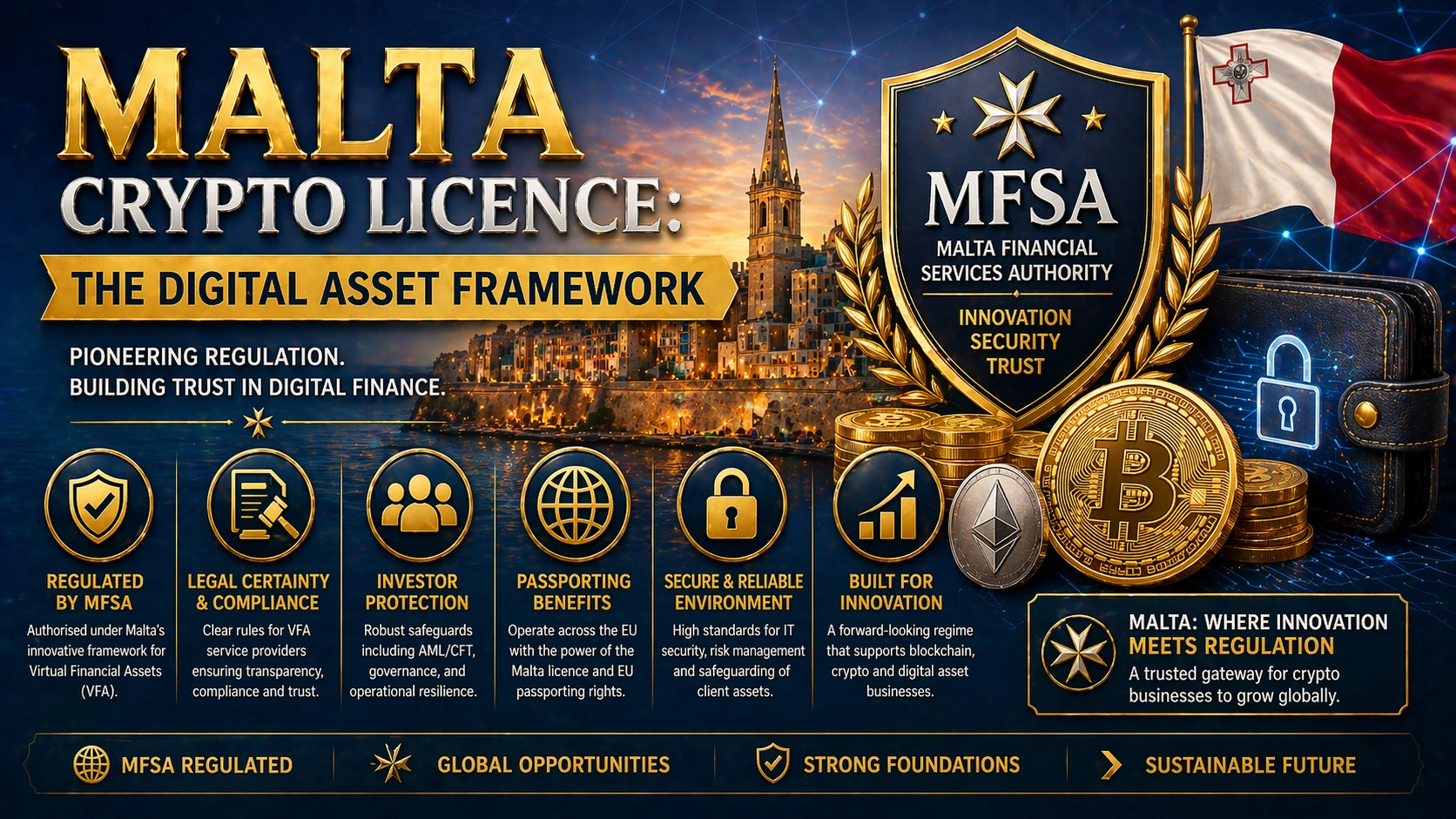
Malta Crypto Licence: The Digital Asset Framework
The malta crypto license landscape has evolved significantly in the past few years. Malta was an early mover in attempting to create a regulated framework for cryptocurrency businesses — the 2018 legislation that established the current MGA framework coincided with Malta’s positioning as a “blockchain island” with broader digital asset regulation.
The intersection of crypto and gambling regulation has produced specific considerations under the Malta framework in 2026. Operators who want to accept cryptocurrency deposits and withdrawals, offer crypto-denominated games, or operate provably fair blockchain-based gambling need to navigate both MGA gambling requirements and Malta’s digital asset framework.
For players, what the Malta crypto approach means practically is that crypto-accepting casinos with MGA licences have had their cryptocurrency operations reviewed as part of the licensing and ongoing compliance process. The games are still independently certified. The player funds requirements still apply. The crypto element doesn’t bypass the protections — it’s integrated into the same framework.
This contrasts with jurisdictions where crypto gambling licensing is primarily about creating a legally permissive environment with minimal oversight. The Malta approach is more demanding for operators to navigate, which is why not every MGA-licensed casino accepts crypto — but for those that do, the framework provides more assurance than offshore crypto gambling licences.
How to Verify a Malta Online Casino Licence
The MGA maintains a public register of all current licences, accessible at mga.org.mt. The search function allows you to look up any operator by name or licence number and see the licence status, the categories authorised, and any conditions or restrictions.
The register also includes information on operators whose licences have been suspended or revoked — which is as important to check as the active licence itself. A casino whose licence was revoked last year but is still operating is a serious red flag.
Step by step for verifying a Malta gambling licence claim:
- Find the licence number in the casino’s footer — it should be formatted as MGA/B2C/XXX/20XX
- Go to mga.org.mt and access the licence register
- Search by the licence number or the operating company name
- Confirm the licence status is active
- Check what game categories are authorised and verify they match what the casino offers
- Review whether any regulatory conditions or sanctions are noted
The MGA also publishes a list of unlicensed operators and warning notices — sites claiming to be MGA-licensed that aren’t, or operators the MGA has flagged for other reasons. Checking this alongside the positive licence register is thorough due diligence that takes under five minutes.
Popular MGA-Licensed Casinos in 2026
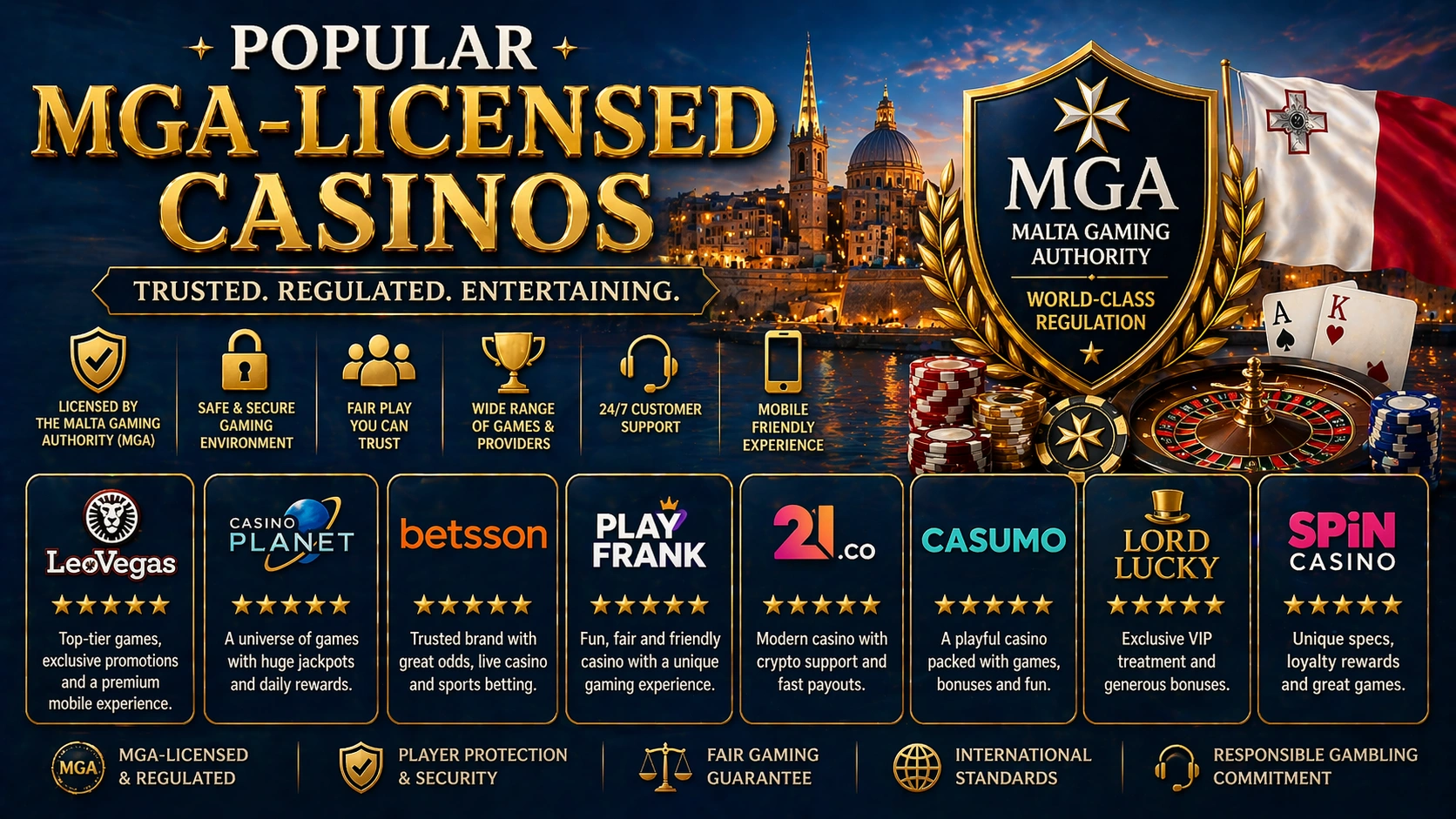
The pool of malta online casino license holders in 2026 includes some of the most established names in the online casino industry. The MGA framework has been the regulatory home of choice for major European operators for two decades, and the current licence list reflects that.
What the best-regarded MGA-licensed casinos in 2026 tend to have in common:
- Multi-year operation under consistent ownership without major payment controversies
- Responsive player support with documented resolution of complaints before they escalate to the MGA
- Diverse payment method support including mainstream cards, established e-wallets, and where relevant, crypto options
- Clean or near-clean enforcement history in the MGA’s published records
- Transparent terms and conditions, particularly around bonuses and withdrawal processes
- Additional licences in specific national markets — DGOJ for Spain, Spelinspektionen for Sweden — alongside the MGA authorisation
The multi-jurisdictional licensing pattern is worth noting. Many serious operators hold their Malta casino licence as a foundation while adding country-specific licences as they develop presence in regulated national markets. An operator that has gone through the DGOJ process for Spain in addition to holding MGA authorisation has demonstrated willingness to meet demanding standards for market access — that’s a positive signal about operational seriousness.
The MGA and Responsible Gambling: More Than Compliance
One area where the MGA framework goes beyond minimum compliance standards is responsible gambling. The requirements have become increasingly substantive in recent years, moving from a tick-box approach toward genuine obligations around player protection.
MGA-licensed operators in 2026 are required to:
- Implement and actively maintain deposit, loss, and session limits that players can set and that take effect without unreasonable delay
- Connect to national self-exclusion registers where they exist in markets they serve
- Have procedures for identifying customers showing signs of harmful gambling — not just responding to self-reports
- Train customer service staff to recognise and respond to problem gambling indicators
- Report responsible gambling metrics to the MGA as part of their compliance obligations
The MGA has sanctioned operators for responsible gambling failures — not just for the absence of tools, but for failing to use the data they had to intervene when customers were clearly in difficulty. That enforcement posture shapes how operators actually implement their responsible gambling programs rather than just formally having them.
For players, this means that MGA-licensed platforms are more likely to reach out proactively if your play patterns suggest a problem, and more likely to have functional tools available when you need them. It also means that the self-exclusion and limit tools are implemented as genuine constraints rather than easily circumvented formalities.
The Enforcement Record: What the MGA Has Actually Done
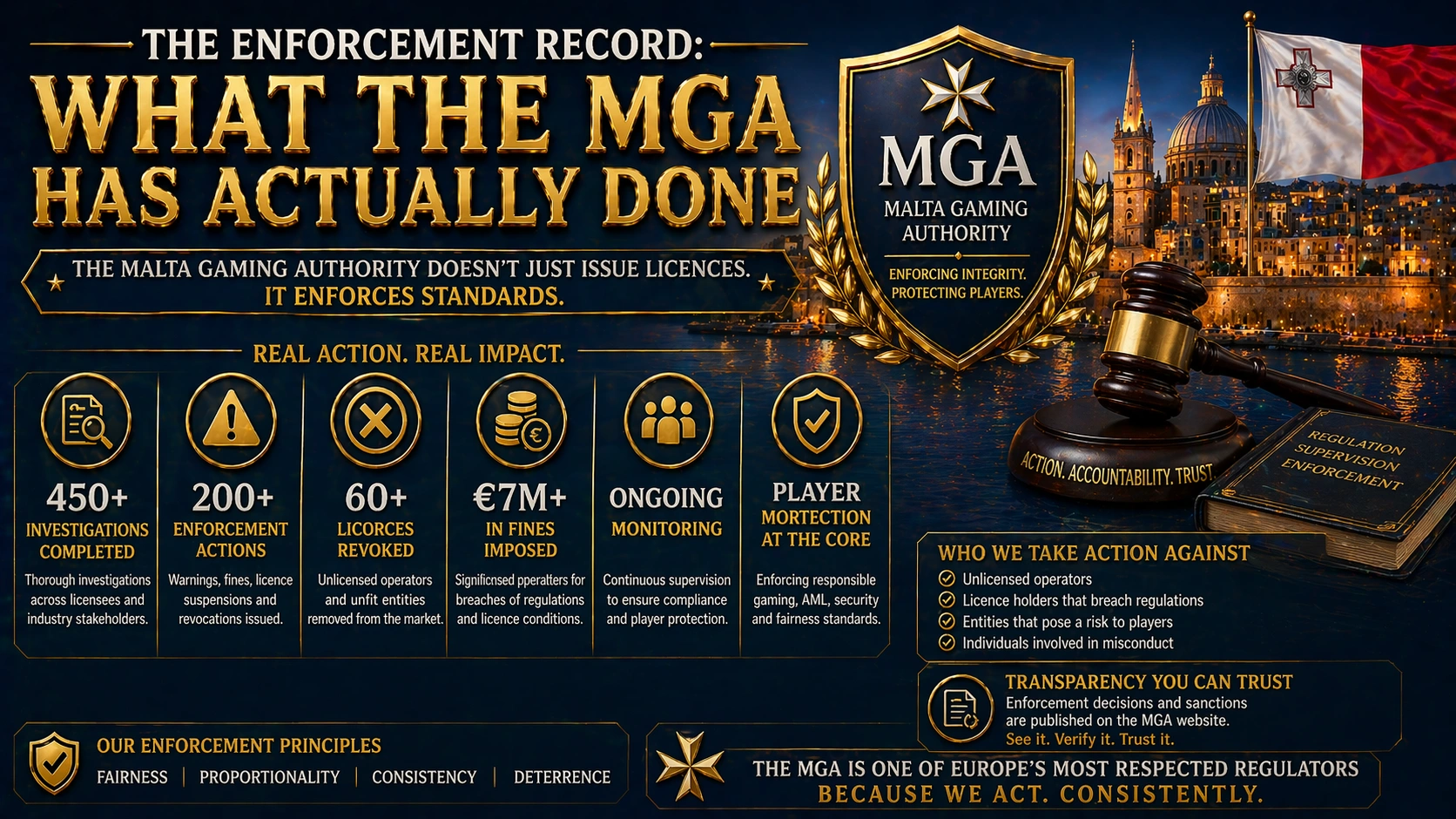
One of the strongest arguments for trusting MGA licensing is its published enforcement record. Unlike many regulators that operate in near-complete opacity, the MGA publishes details of sanctions against its licensees.
Recent enforcement activity has covered:
- Failures in AML procedures — operators not conducting adequate due diligence on high-value customers
- Responsible gambling breaches — operators allowing customers to continue gambling beyond self-imposed limits or after clear signs of harm
- Technical failures affecting game fairness
- Marketing to self-excluded customers
- Late filing of required compliance documentation
The financial penalties imposed have ranged from tens of thousands to several million euros depending on the severity of the breach. Some operators have had licence conditions applied that restrict specific activities. Others have had licences suspended pending investigation.
This visible enforcement record serves two functions. It demonstrates that the MGA actually uses its powers rather than collecting fees and looking the other way. And it gives players a searchable history of operator conduct that can inform choices about where to play.
Malta’s Position in the 2026 Regulatory Landscape
The broader context for malta gaming license authority in 2026 is a European regulatory environment that has become progressively more demanding. Germany, the Netherlands, Sweden, and other major markets have implemented or tightened national licensing requirements. The EU has continued developing frameworks around digital services and financial transparency that affect how gambling operators structure their businesses.
Malta’s response has been to continue developing the MGA framework rather than resting on its established reputation. The 2024 updates to compliance requirements, the ongoing development of crypto gambling oversight, and the increasing alignment with EU AML directives all reflect a regulator trying to stay ahead of the curve rather than defend legacy positions.
For operators, this means the cost and complexity of Malta gambling licence compliance continues to increase. For players, it means the protections available at MGA-licensed casinos continue to develop. The direction of travel is positive, and Malta’s position as the primary European regulatory framework for international online gambling operators looks secure through the foreseeable future.
FAQ
Is an MGA Malta licence the same as a European licence?
Not technically — the MGA is a Maltese regulator, not an EU-wide authority. But because Malta is an EU member state, MGA-licensed operators operate within the EU regulatory environment, which gives their licence a degree of EU-aligned standing. It’s a meaningful distinction compared to post-Brexit UKGC licensing or offshore frameworks.
How much does a Malta gambling licence cost in 2026?
First-year costs including application fees, annual licence fees, technical audit costs, and compliance setup typically run between €200,000 and €400,000 or more depending on the size and complexity of the operation. Annual ongoing costs are lower but still substantial. The cost is intentionally high as a quality filter.
How do I verify that a casino actually has a Malta casino licence?
Go to mga.org.mt, access the public licence register, and search by the casino’s company name or licence number. Confirm the licence is active, check the categories authorised, and review the enforcement history. This takes under five minutes and is the only reliable verification method.
What are the Malta licence categories for online casinos?
B2C Gaming Service Licences cover different game types: Type 1 for games of chance including slots and table games, Type 2 for player-versus-player games like poker, Type 3 for fixed-odds betting, and Type 4 for fantasy and skill games. An operator must be authorised in each type they offer.
Does a Malta online gaming licence protect me if the casino refuses to pay?
Yes, to a meaningful extent. The MGA’s Player Support Unit accepts complaints from players of MGA-licensed operators. If your complaint isn’t resolved by the operator within a reasonable timeframe, the PSU can investigate and issue a determination binding on the operator. It’s not instantaneous but it’s a genuine remedy.
Is the MGA licence better than a UKGC licence for European players?
Both are top-tier regulatory frameworks. For players in EU countries including Spain, an MGA licence provides access to EU-aligned regulatory protections. UKGC is arguably more rigorous in enforcement intensity and has a more developed ADR system. Neither is universally better — both are substantially superior to offshore alternatives.
Does Malta issue a crypto licence for gambling operators?
Malta has frameworks covering both gambling licensing and digital asset regulation. Operators accepting cryptocurrency at MGA-licensed casinos must integrate crypto within the MGA’s compliance framework rather than treating it as outside regulatory scope. The malta crypto license approach is more demanding than pure offshore crypto gambling licences but provides more genuine oversight.
How long does it take to get a Malta gaming licence?
The MGA application process typically takes twelve to eighteen months from initial application to licence issuance. The timeline reflects the thoroughness of the review — personnel vetting, technical audits, financial assessment, and policy review all take real time. Operators who try to shortcut the process or submit incomplete documentation face delays.