The Anjouan Gaming License in 2026: What It Is, What It Costs, and What It Actually Means
There’s a pattern that repeats itself in online gambling regulation. A small jurisdiction — often an island, often with limited alternative revenue streams — spots an opportunity in the licensing market, sets up a regulatory framework, and starts issuing authorisations to casino operators who want something legal without the demands of Malta or the UK. Anjouan fits that pattern almost perfectly, and in 2026 it’s become one of the more talked-about names in iGaming licensing circles.
Whether that’s a good thing depends on who’s asking. For operators looking for a cost-effective route to market, the Anjouan gaming license 2026 offers genuine appeal. For players trying to evaluate what a particular licence means for their protection, the picture is more complicated.
This article covers both perspectives — where Anjouan is, how its licensing system works, what things cost, which countries are restricted, and what the ANJ licence actually delivers compared to better-known regulatory frameworks.

100% first deposit bonus up to £600 + 100 free spins


Welcome bonus up to 550% + 450 free spins
100% first deposit bonus up to £300 + 150 free spins
First deposit bonus 100% up to £500 + 200 Free Spins

First deposit bonus 120% up to £600

100% first deposit bonus up to £500 + 200 free spins
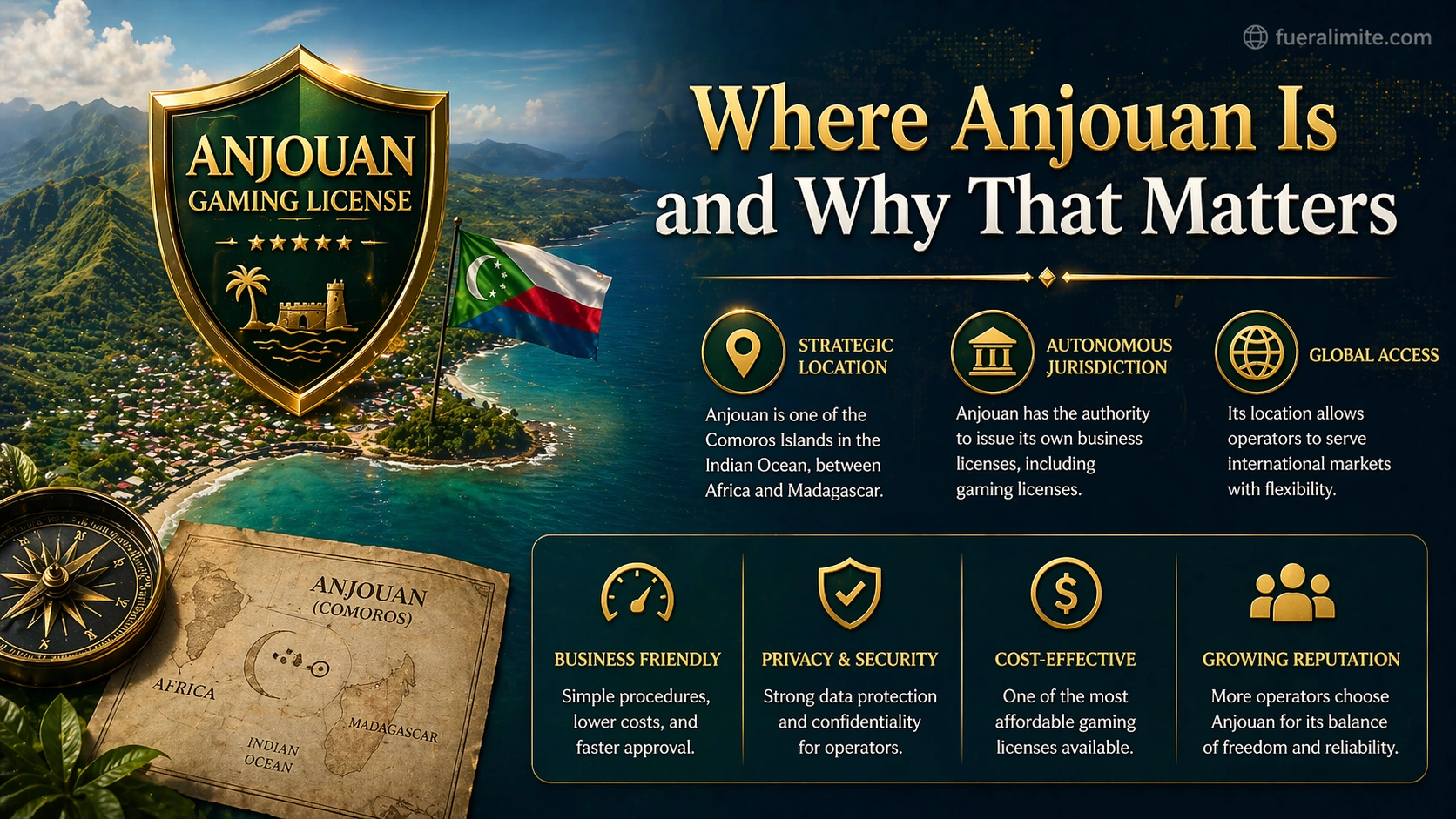
Where Anjouan Is and Why That Matters
Anjouan — officially known as Ndzuwani — is one of three main islands that make up the Union of the Comoros, an archipelago in the Indian Ocean off the east coast of Africa, roughly halfway between Madagascar and the Mozambique coast. It has a population of around 350,000 people, an economy that has historically relied on agriculture, fishing, and remittances, and a history that includes multiple attempted secessions from the Comoros mainland.
The island doesn’t have obvious natural advantages for becoming a global gaming licence hub. No particularly sophisticated financial sector, no existing reputation in international business services, no proximity to major markets. What it has is a government willing to issue licences and a regulatory framework designed to be accessible enough to attract operators who’ve been priced out of or rejected by more demanding jurisdictions.
The Anjouan Offshore Finance Authority is the body responsible for issuing the gambling license Anjouan operators obtain. It operates under Comorian law, which means it sits within a legal framework that most European players and regulators have limited familiarity with. That’s not automatically a problem — plenty of legitimate businesses operate under unfamiliar jurisdictions — but it’s context worth having.
How the Anjouan Gaming Licence Came to Prominence
The Anjouan igaming license started gaining meaningful traction around 2021-2022. The timing wasn’t coincidental. Curaçao, which had for decades been the default choice for operators wanting a low-barrier gaming licence, was in the early stages of a significant regulatory reform process. Operators that had been relying on Curaçao sublicences found themselves facing an uncertain transition period, and some started looking at alternatives.
Anjouan positioned itself as that alternative. The application process was relatively quick, the costs were lower than the reformed Curaçao framework, and the requirements were accessible enough that operators who might have struggled with stricter jurisdictions could obtain authorisation.
By 2024 and into 2026, the ANJ casino license had become common enough that players encounter it regularly on platforms operating in grey markets across Europe, Latin America, and Asia. It appears in casino footers alongside the name of the Anjouan Offshore Finance Authority, usually with a licence number that can theoretically be verified through official channels.
The ANJ Licence: What It Covers and How It Works
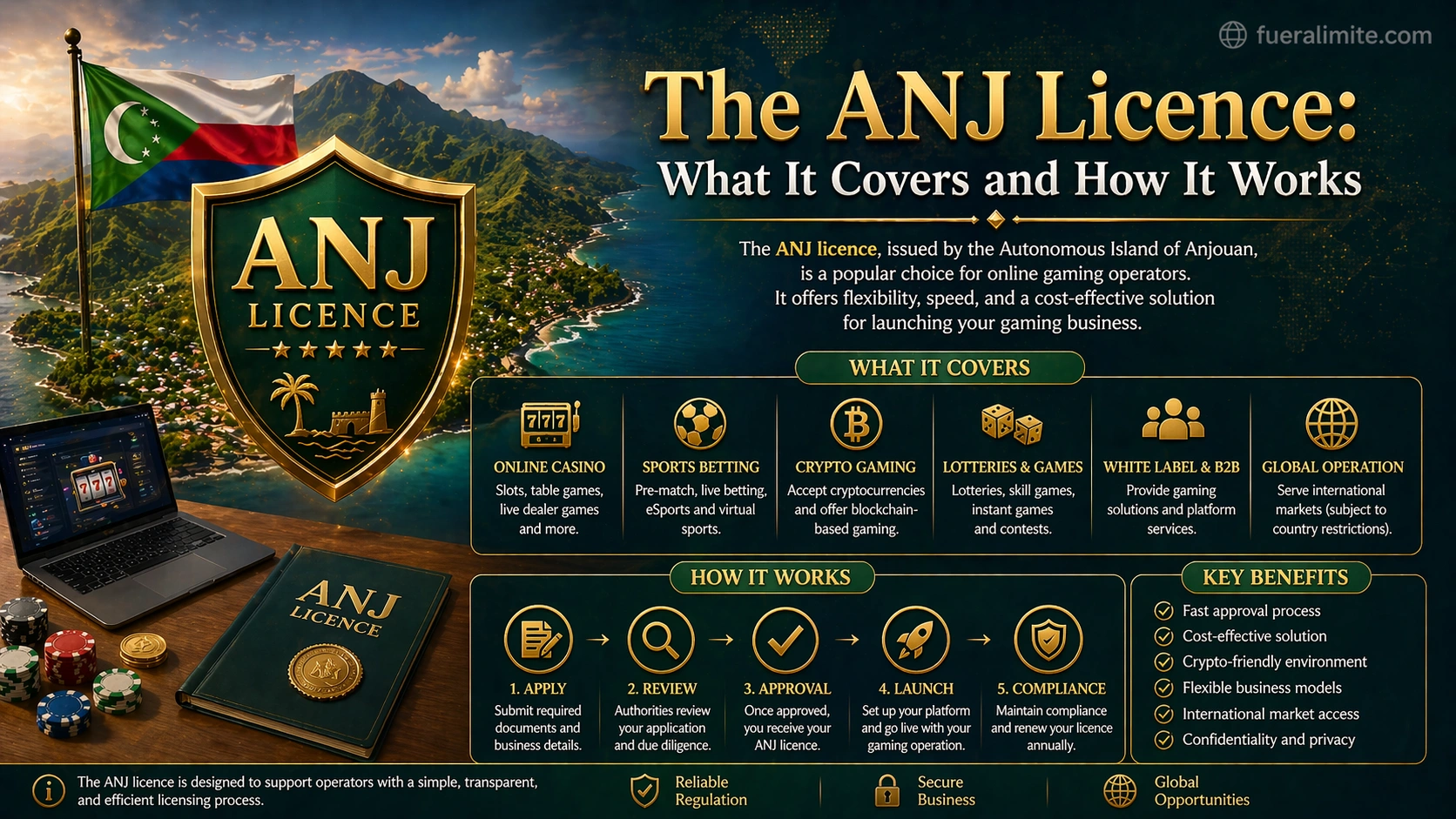
The casino ANJ licence is a single-category authorisation that covers online gambling activities broadly — casino games, sports betting, poker, and increasingly cryptocurrency gambling operations. Unlike some jurisdictions that issue separate licences for different gambling verticals, the Anjouan framework tends toward comprehensive coverage under one authorisation.
The licence is issued to the operating company, which must be incorporated in Anjouan or meet the jurisdiction’s requirements for foreign company registration. The operator is then authorised to offer online gambling services globally, subject to the restricted countries framework and whatever local laws apply in the territories where they accept players.
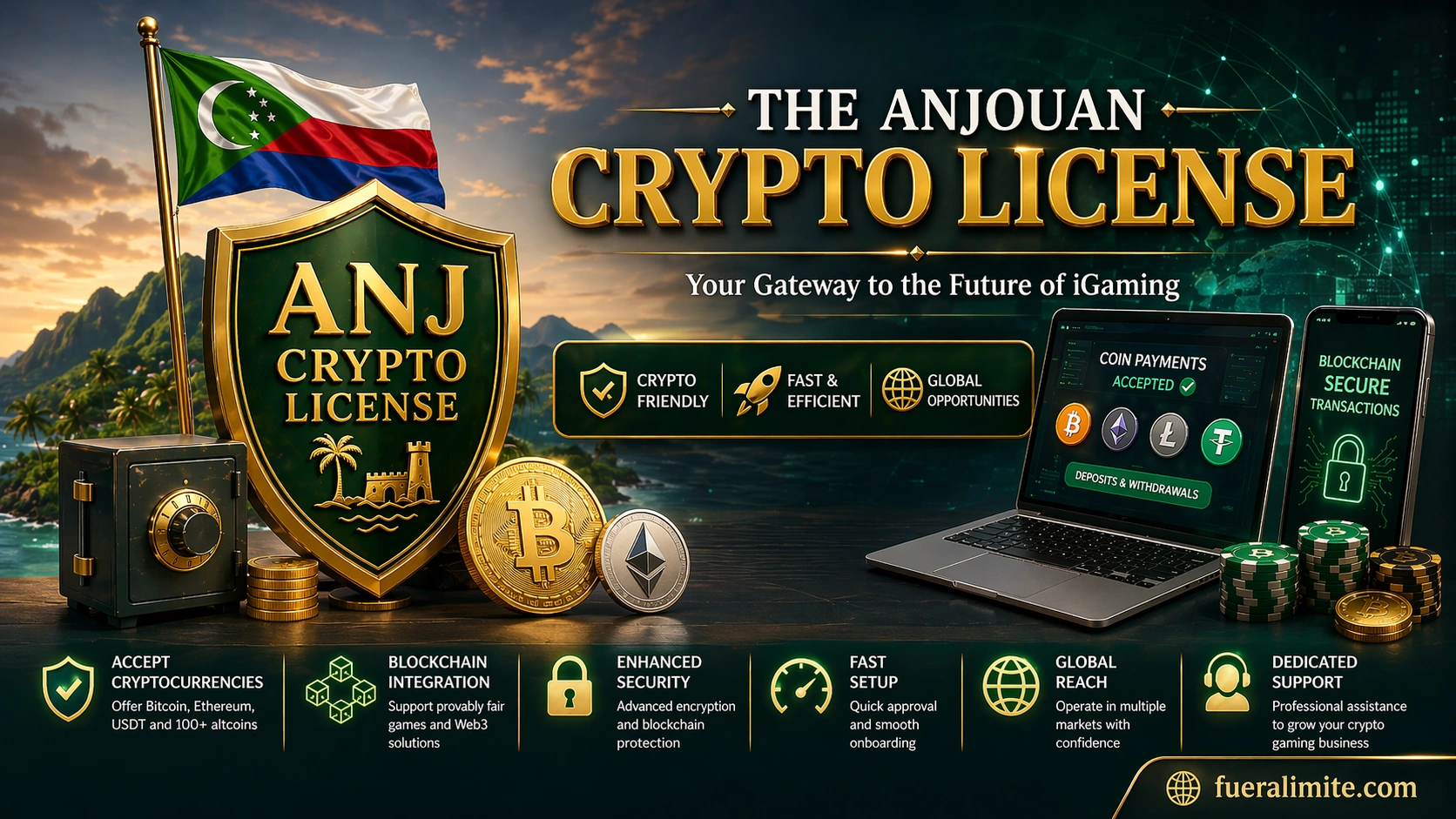
One of the more significant developments in recent years has been the Anjouan crypto license category. As cryptocurrency gambling has grown into a substantial segment of the online casino market — particularly for operators targeting markets where traditional payment methods face regulatory friction — Anjouan has positioned its licensing framework as crypto-friendly. The crypto license in Anjouan covers both standard cryptocurrency payment processing and, in some cases, provably fair blockchain-based gambling operations.
This has made the ANJ licence particularly attractive to crypto casino operators who want a formal regulatory basis for their activities without the compliance complexity of jurisdictions that have tighter cryptocurrency oversight requirements.
Anjouan Gaming License Cost: What Operators Actually Pay
The anjouan gaming license cost is one of the framework’s main selling points for operators, and understanding the cost structure helps explain why so many platforms have chosen it.
The application fee for an Anjouan gambling license sits significantly below what equivalent licences cost in Malta or Gibraltar. Exact figures vary and are subject to change, but the general structure in 2026 looks like this:
| Cost Component | Approximate Amount | Notes |
|---|---|---|
| Application fee | $15,000 – $25,000 | One-time, payable on submission |
| Annual licence fee | $15,000 – $30,000 | Recurring, due on anniversary |
| Company incorporation | $3,000 – $8,000 | If incorporating in Anjouan |
| Compliance/legal setup | $5,000 – $15,000 | Third-party service providers |
| Total first-year cost | $38,000 – $78,000 | Approximate range |
The Anjouan license cost compares favourably with the MGA, where initial costs including application fees, compliance infrastructure, and required capital can run into several hundred thousand euros before the first game is offered. UKGC costs are similarly substantial.
For a startup operator or a small-to-medium platform that can’t justify the compliance spend of a Tier 1 licence, the Anjouan casino license offers a legally structured basis for operation at a fraction of the cost. That’s the commercial case for it, and it’s a real one.
What the lower cost also signals, though, is a lighter regulatory touch. The requirements that make MGA and UKGC licences expensive — thorough vetting of personnel, independent game certification, mandatory player funds segregation, active ongoing supervision — are either absent or less rigorously applied in Anjouan. You get what you pay for in regulation as in most things.
Anjouan Gaming License Restricted Countries
The Anjouan gaming license restricted countries list is one of the more important practical details for anyone trying to understand what this licence covers. Like most offshore gaming jurisdictions, Anjouan excludes certain markets from its licence coverage — either because those markets require local licences to operate legally, or because operating there creates compliance risks the framework isn’t equipped to manage.
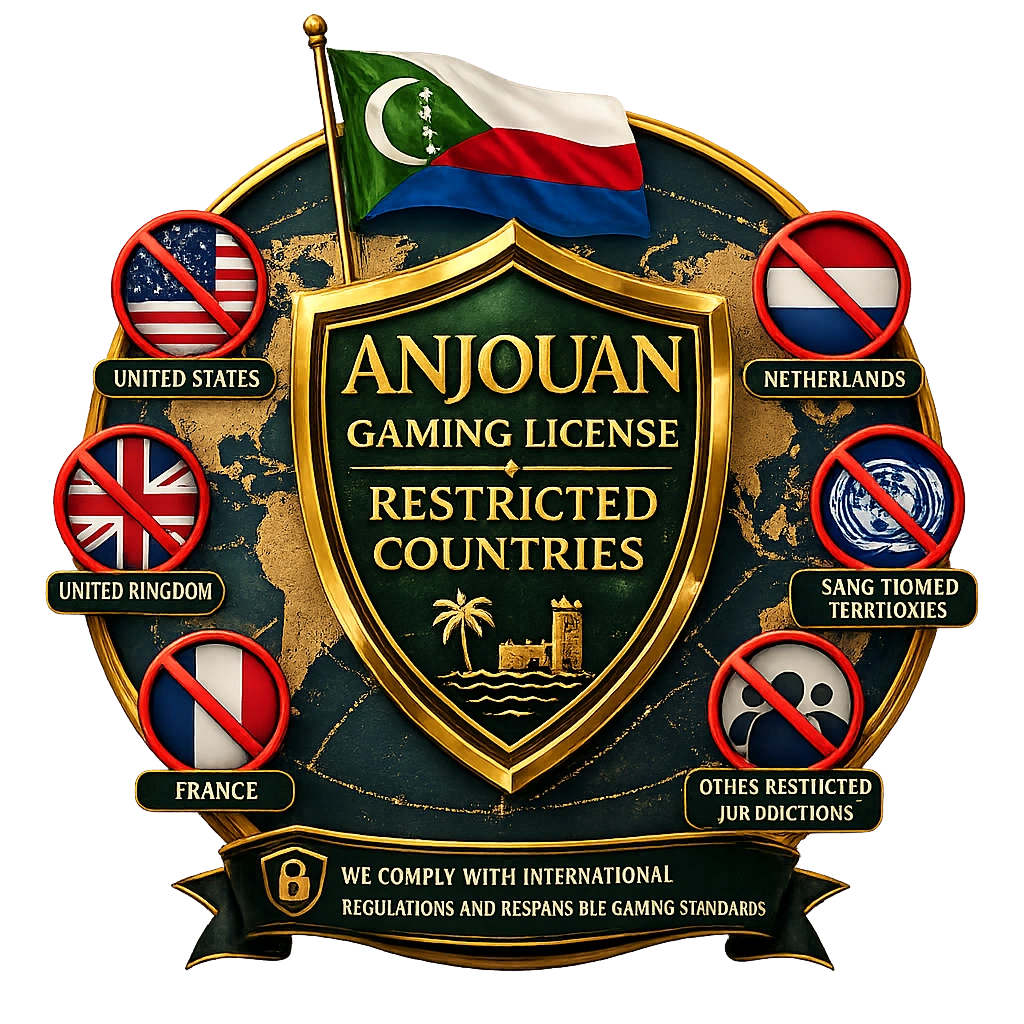
The standard restricted countries for an ANJ licence typically include:
- United States and its territories
- United Kingdom (requires UKGC licence)
- France (requires ARJEL/ANJ French authority licence — note this ANJ is a different authority from the Anjouan one)
- Australia (regulated at state and federal level)
- Netherlands (requires KSA licence)
- Germany (requires DSWV/state-level licence)
- Sweden (requires Spelinspektionen licence)
- Spain (requires DGOJ licence)
- Italy (requires ADM licence)
- Belgium (requires Gaming Commission licence)
This list isn’t exhaustive, and the precise countries restricted under any specific ANJ casino licence depend on the terms of that individual authorisation. Operators are responsible for ensuring they don’t accept players from jurisdictions where they lack local authorisation.
For players in Spain, this is directly relevant. Spain appears on the restricted list for most Anjouan licences, which means operators holding an Anjouan gambling license are technically not supposed to accept Spanish players. In practice, some do — geo-restriction can be circumvented and enforcement capacity is limited. But it means that if you’re a Spanish player using a site licensed only in Anjouan, you’re operating without any regulatory protection in your jurisdiction, and the casino may itself be acting outside the terms of its own licence.
What the ANJ Licence Requires of Operators: The Honest Picture
Understanding what the Anjouan igaming license actually demands from operators is useful context before evaluating what it means as a player protection mechanism.
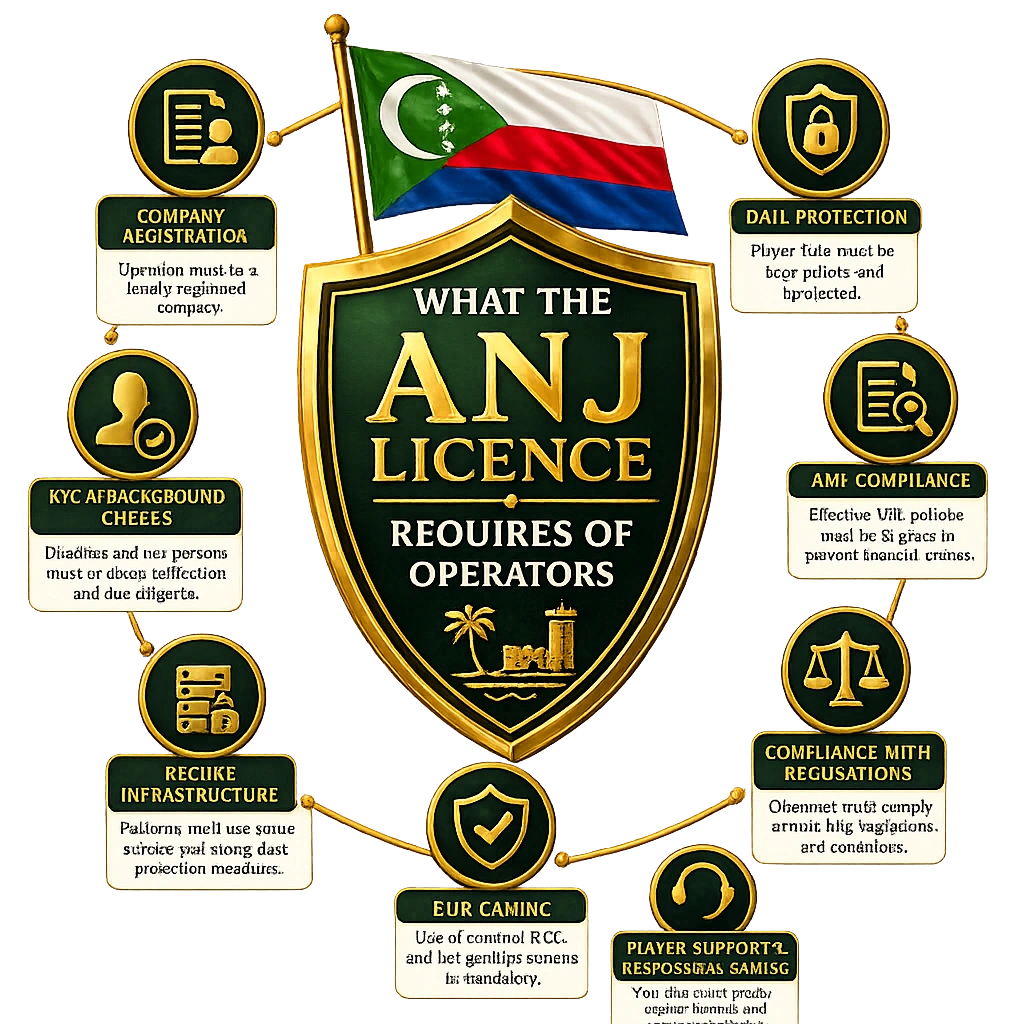
The application process requires operators to submit:
- Company registration documents and ownership structure
- Information on key personnel — typically directors and beneficial owners
- A business plan describing the gambling services to be offered
- Technical documentation for the platform
- Anti-money laundering policy documentation
- Evidence of financial standing
The depth of scrutiny applied to these requirements is the meaningful variable. In jurisdictions like the UKGC, the fit and proper assessment of key personnel is genuinely rigorous — background investigations, financial history, reputational checks. The Anjouan framework is less demanding. Applications have been processed in weeks rather than months, which tells you something about the depth of verification being applied.
Ongoing obligations for holders of an Anjouan casino license include annual renewal, compliance with the AML policy requirements, and operation within the framework of the licence terms. Active supervision — where the regulator proactively monitors operator behaviour, investigates player complaints, or audits game fairness — is limited compared to European tier-1 regulators.
Game certification is not universally required in the way it is under UKGC or MGA frameworks. Independent testing of random number generators and RTP accuracy, which is standard under rigorous jurisdictions, is not consistently mandated under Anjouan requirements. This is perhaps the most significant gap from a player perspective — it means there’s less external verification that games on Anjouan-licensed platforms function as described.
The Anjouan Crypto License: Why It’s Growing
The crypto license in Anjouan has become a distinct and growing category within the framework. The growth tracks the broader expansion of crypto gambling — platforms that accept Bitcoin, Ethereum, and other cryptocurrencies for deposits and withdrawals, often with provably fair games using blockchain-based randomness verification.
Crypto gambling has a complicated relationship with traditional regulatory frameworks. Many major jurisdictions either haven’t developed crypto-specific licensing categories or have applied such stringent requirements to cryptocurrency handling that smaller operators find compliance impractical. Anjouan has moved into this gap.
The Anjouan crypto license covers operators offering gambling with cryptocurrency payment options, including in some cases platforms operating primarily or exclusively in crypto with no fiat currency involvement. The requirements around cryptocurrency handling, wallet management, and blockchain transaction reporting are less demanding than what financial regulators in major jurisdictions would require — which is precisely the appeal for operators who want regulatory cover without comprehensive crypto compliance obligations.
For players, crypto gambling on Anjouan-licensed platforms has specific characteristics worth understanding. The decentralised nature of cryptocurrency transactions means that deposits are typically irreversible — there’s no chargeback mechanism equivalent to credit card disputes. If you deposit cryptocurrency to an Anjouan-licensed platform and have a problem, your recovery options are limited to whatever the platform itself offers, plus whatever the Anjouan licensing authority will do on your behalf (which in practice is modest).
How the ANJ Licence Compares to Other Frameworks
| Aspect | Anjouan ANJ | MGA Malta | UKGC UK | Curaçao (reformed) |
|---|---|---|---|---|
| Licence cost (first year) | $38k–$78k | €200k–€500k+ | £100k–£400k+ | €50k–€150k |
| Personnel vetting depth | Basic | Thorough | Very thorough | Moderate |
| Game certification required | Not consistently | Mandatory | Mandatory | Partial |
| Player funds segregation | Not mandated | Mandatory | Mandatory (tiered) | Required from 2024 |
| Active player complaints process | Limited | Player Support Unit | ADR system | Developing |
| Enforcement and sanctions | Minimal public record | Published | Fully published | Improving |
| Restricted from Spanish players | Yes (standard terms) | No restriction | No restriction | No restriction |
| Crypto-specific framework | Yes | Partial | Limited | Partial |
The table makes the trade-offs clear. Anjouan is cheaper and faster and covers crypto more flexibly than most alternatives. It provides less independent verification of game fairness, less mandated player fund protection, and less accessible complaints resolution. Whether those trade-offs are acceptable depends on what you’re looking for.
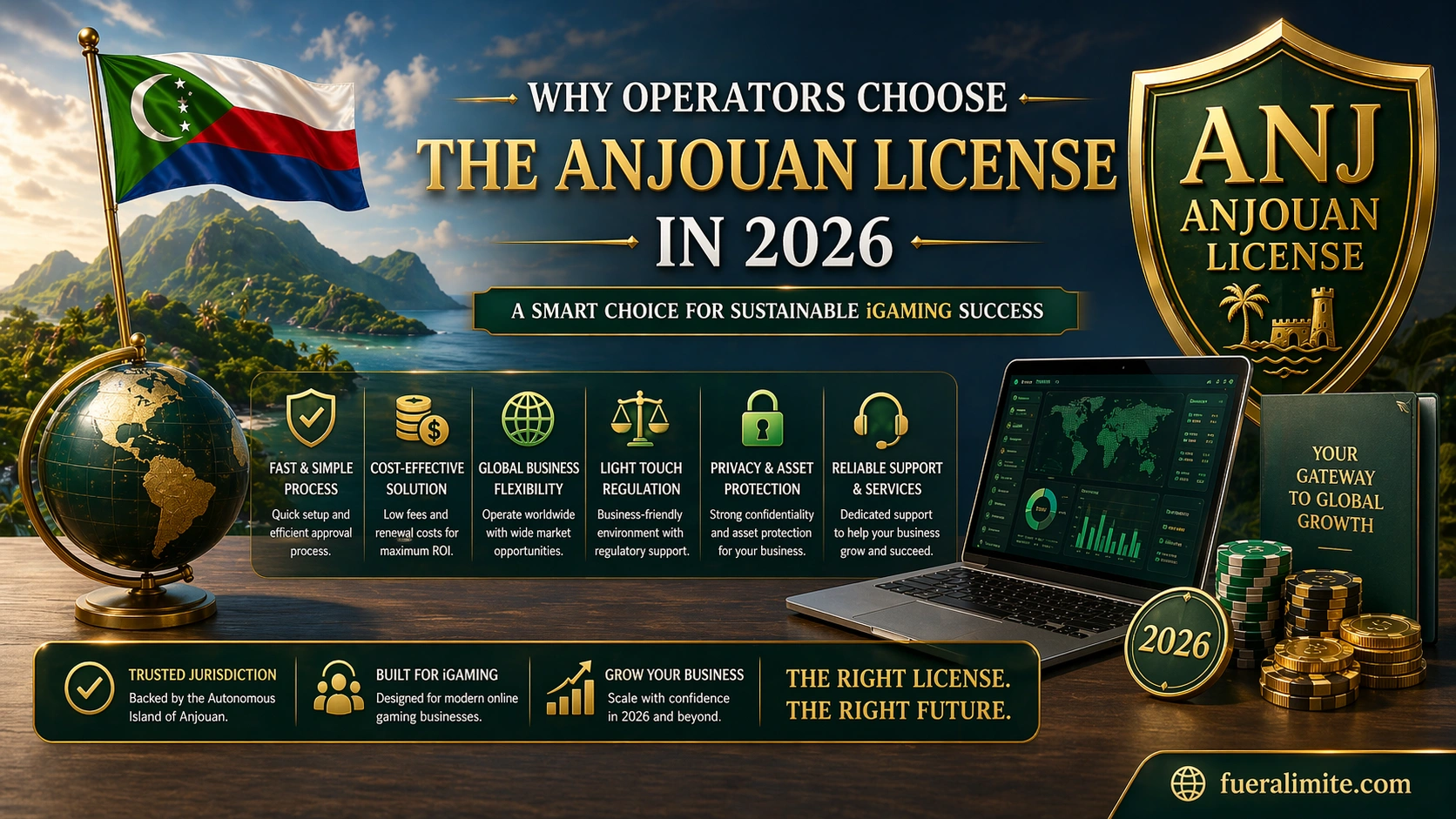
Why Operators Choose the Anjouan License in 2026
Beyond the cost argument, several other factors have contributed to the growth of Anjouan licensing in 2026.
Market access speed is one. An operator that wants to launch quickly and start accepting players can obtain an ANJ licence in weeks. An MGA application might take twelve to eighteen months. For a startup trying to time a market launch or capitalise on a particular opportunity, that difference is commercially significant.
Flexibility is another. The Anjouan framework doesn’t impose the detailed game design requirements, responsible gambling tool mandates, or marketing restrictions that come with tier-1 licences. An operator that wants to run a casino the way they want to run it, without detailed regulatory requirements about autoplay settings or session time reminders, finds Anjouan more accommodating.
Crypto integration is a third factor, as discussed. Operators who are building primarily crypto-native platforms find the Anjouan crypto license pathway significantly more straightforward than trying to navigate the cryptocurrency requirements of European regulators that are still developing their frameworks.
And finally, there’s the question of markets. While Spain, the UK, and other heavily regulated markets are on the restricted list, large parts of the world — Latin America outside certain jurisdictions, parts of Asia, Africa, and emerging markets generally — don’t have clear local licensing requirements. An Anjouan license gives an operator a formal regulatory basis for operating in those grey-market territories where the alternative is operating with no licence at all.
What an Anjouan Licence Means for Players
If you’re a player rather than an operator, the practical question is what an ANJ casino license tells you about a platform you’re considering.
The honest answer is that it tells you less than a UKGC or MGA licence tells you, but more than no licence at all.
An Anjouan gambling license confirms that the operator has gone through some kind of formal application process, has paid fees to a regulatory authority, and has documented commitments to anti-money laundering procedures and basic operating standards. That’s a meaningful baseline above the level of zero oversight.
What it doesn’t reliably confirm:
- That the games are independently certified for fairness
- That your funds are held separately from the operator’s operating capital
- That there’s a functional process for resolving your complaints if the operator doesn’t
- That the people running the platform have passed thorough background checks
- That the operator will still be around next year under the same ownership
The most useful approach when evaluating an Anjouan-licensed platform is to treat the licence as a starting point for investigation rather than a conclusion. The questions worth asking beyond the licence:
- How long has this specific operator been running under this name and ownership?
- What does player community feedback in independent forums say about their withdrawal history?
- Is there a documented history of complaints that didn’t get resolved?
- Are the payment methods they accept mainstream enough that payment processors have done their own due diligence?
- Are the bonus terms written clearly, or in ways that give the operator unlimited discretion?
A platform with an ANJ licence that has been running for five or more years with consistent payment records and positive community feedback is a meaningfully different proposition from a newly launched platform with the same licence and no track record.
The Regulatory Trajectory: Where Anjouan Licensing Is Heading
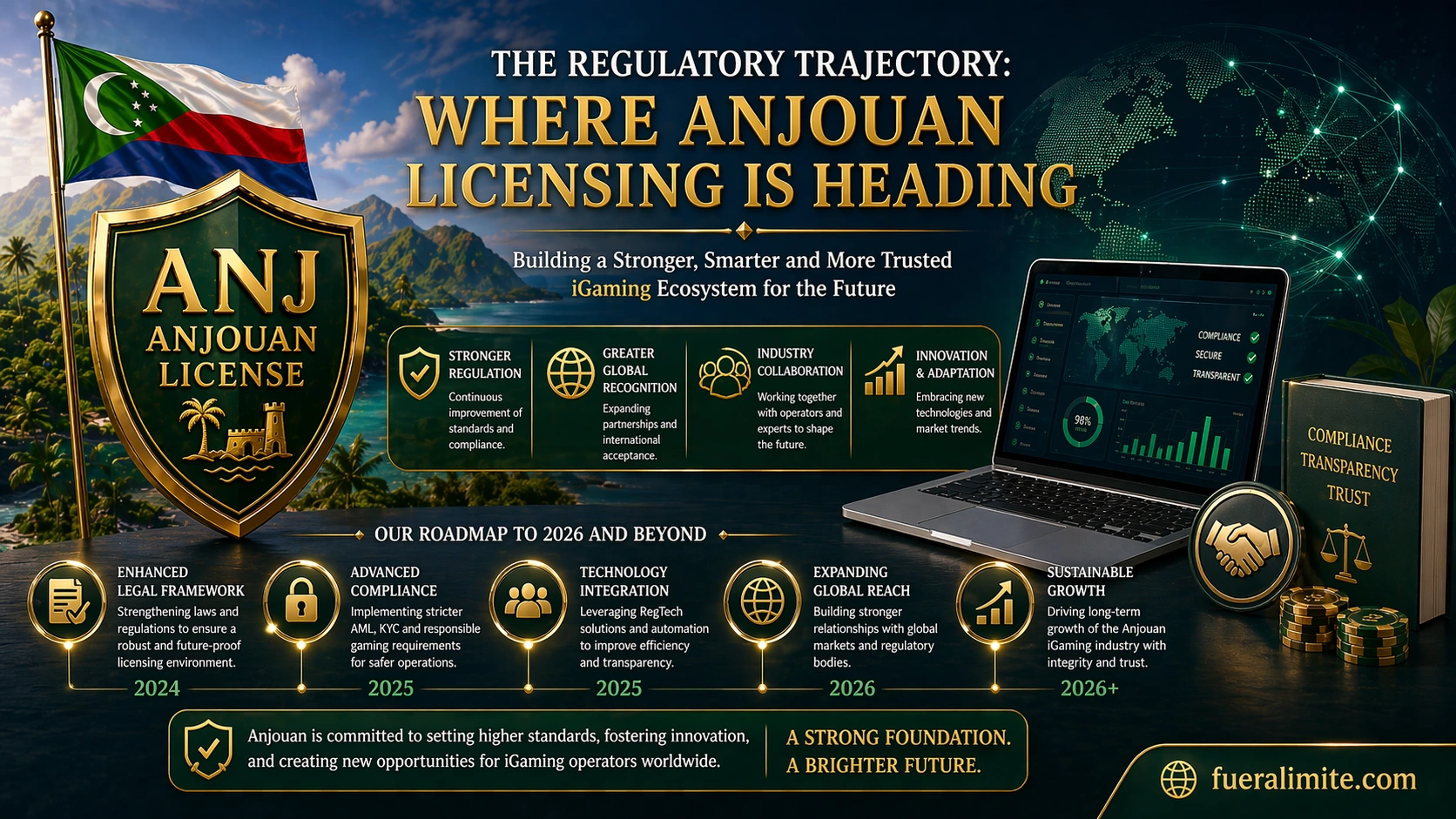
The broader context for the Anjouan igaming license in 2026 is worth considering. The offshore gaming licence market has been under increasing pressure from multiple directions.
European regulators have been pushing for stricter controls on which licensed operators can access their markets, including blocking unlicensed operators at payment processor and ISP level. The EU’s broader push toward financial transparency has made it harder for opaque offshore structures to operate smoothly. And player awareness of licensing quality has increased — the days when displaying any licence badge in a footer was enough to satisfy most players are fading.
Against this backdrop, Anjouan faces a choice that other offshore jurisdictions have faced before it: evolve the framework toward higher standards or remain a low-cost option that occupies a shrinking segment of the market as major markets enforce their domestic requirements more effectively.
There have been signals in 2025-2026 of incremental tightening — somewhat more structured application requirements, more attention to the restricted countries framework, early steps toward a more visible enforcement record. Whether this translates into substantive regulatory improvement comparable to what Curaçao has attempted with its reform process remains to be seen.
For operators currently holding or considering an Anjouan casino license, the direction of travel suggests that the framework will likely become somewhat more demanding over time, even if it remains significantly lighter than tier-1 jurisdictions. Building compliance infrastructure proactively rather than reactively is probably the sensible operational approach.
Practical Summary: The ANJ Licence in Context
The Anjouan gaming license occupies a specific and honest position in the licensing landscape of 2026. It’s a lower-cost, faster, and more flexible alternative to the demanding European frameworks, with genuine appeal for certain categories of operator and genuine limitations from a player protection perspective.
For operators entering emerging markets, building crypto-native platforms, or operating in territories without strict local licensing requirements, the ANJ licence provides a legitimate regulatory basis at accessible cost. The trade-off is operating under lighter scrutiny and with less reputational capital than a UKGC or MGA licence provides.
For players, encountering an Anjouan-licensed casino should prompt research rather than automatic acceptance or rejection. The licence exists, the authority is real, and some operators using it are running legitimate businesses. But the protections it mandates are limited compared to what serious European regulators require, and the complaints pathway it provides is less accessible and less functional than what you’d have through an ADR scheme under UKGC oversight.
The rule of thumb that applies here is the same one that applies across all offshore licences: the licence tells you the operator exists within some kind of legal framework. Everything else — game fairness, fund safety, payment reliability, complaint resolution — you have to evaluate through the operator’s own track record.
FAQ
Is the Anjouan gaming license legitimate?
Yes, it’s issued by a real government authority — the Anjouan Offshore Finance Authority — under Comorian law. It’s a genuine licence from a recognised jurisdiction. The question isn’t whether it’s real, but what level of oversight and player protection it actually provides, which is more limited than tier-1 European licences.
How much does an Anjouan gaming license cost in 2026?
First-year costs including application fees, annual licence fees, and incorporation typically run between $38,000 and $78,000 depending on the service providers used and the specific requirements of the application. Annual renewal costs are lower, typically in the $15,000–$30,000 range.
Can I play at an Anjouan-licensed casino if I’m in Spain?
Spain is on the standard restricted countries list for most ANJ licences, which means the operator isn’t supposed to accept Spanish players. Some do anyway. If you use such a platform, you have no regulatory protection from the DGOJ and limited recourse through the Anjouan framework if problems arise.
What’s the difference between an Anjouan licence and a Curaçao licence?
Both are offshore jurisdictions with lower barriers than European tier-1 regulators. Curaçao has been through a significant reform process since 2023 that has raised its standards moderately. Anjouan is newer to the market and has lighter requirements currently. Both sit below MGA and UKGC in terms of player protection framework.
Does the Anjouan crypto license cover all cryptocurrencies?
The scope depends on the specific licence terms. Generally, the crypto license in Anjouan covers common cryptocurrencies like Bitcoin and Ethereum, with flexibility around altcoins depending on how the operator’s platform is structured. It’s one of the more crypto-accommodating licensing frameworks currently available.
How do I verify an Anjouan casino licence?
The licence number should be visible in the casino’s footer. Verification through the Anjouan Offshore Finance Authority’s official channels is possible, though the process is less streamlined than checking the UKGC or MGA public registers. If a platform claims ANJ licensing but won’t provide a verifiable licence number, that’s a meaningful red flag.