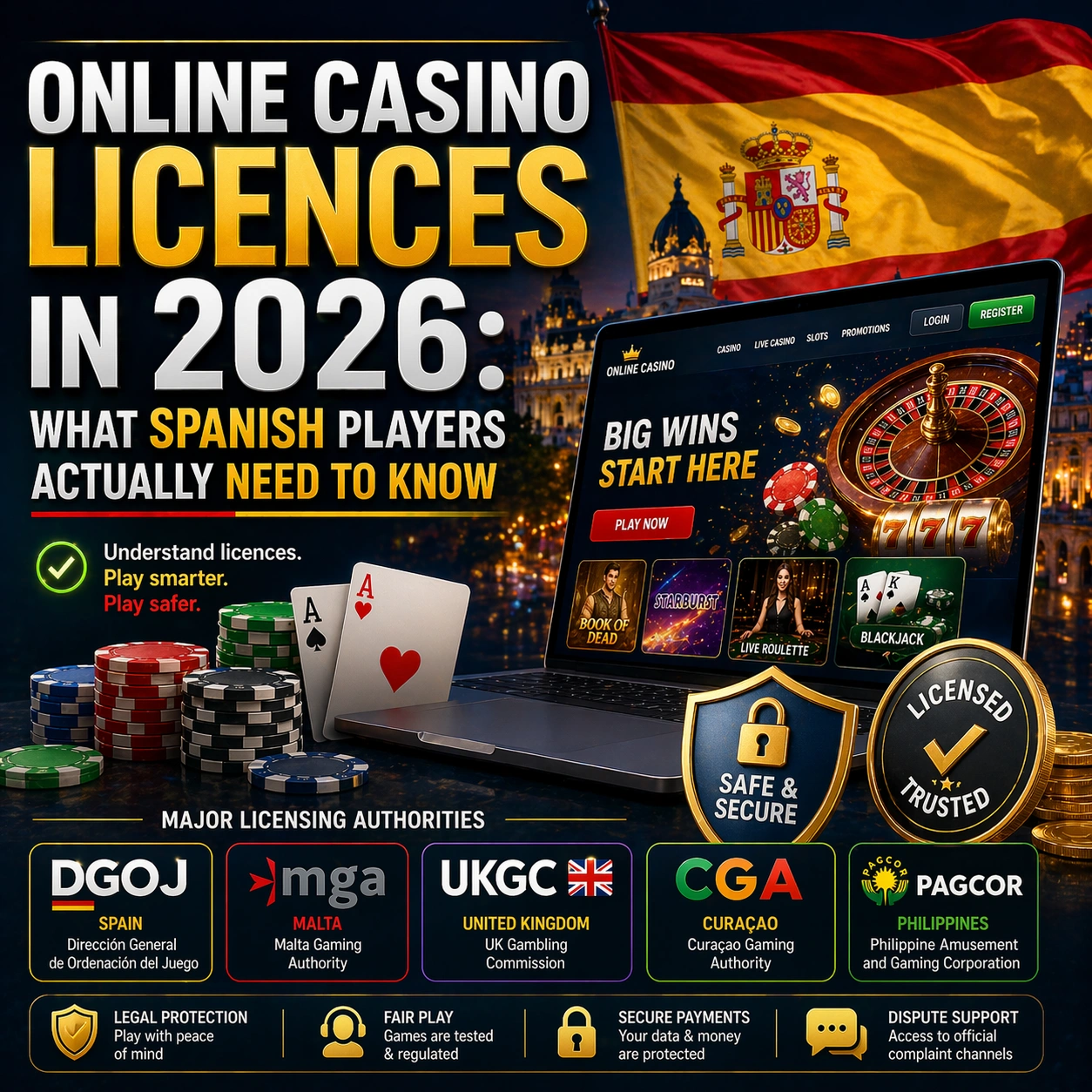
Online Casino Licences in 2026: What Spanish Players Actually Need to Know
Most players never think about casino licences until something goes wrong. A withdrawal request sits pending for two weeks, an account gets closed without explanation, a bonus gets voided for reasons that weren’t in any terms they read. That’s usually the moment the question arrives: who exactly is running this site, and does anyone have oversight of what they’re doing?
The answer to that question is a casino licence. Or rather, the answer depends entirely on which licence, from where, and what it actually means in practice. Because not all licences are created equal, and the gap between the strongest and weakest regulatory frameworks in this industry is enormous.
This guide works through the main licensing jurisdictions that Spanish players encounter in 2026 — what each one requires, what it means for you as a player, and how to use that information when choosing where to play.


100% first deposit bonus up to £600 + 100 free spins


Welcome bonus up to 550% + 450 free spins

100% first deposit bonus up to £300 + 150 free spins

First deposit bonus 100% up to £500 + 200 Free Spins


First deposit bonus 120% up to £600

100% first deposit bonus up to £500 + 200 free spins
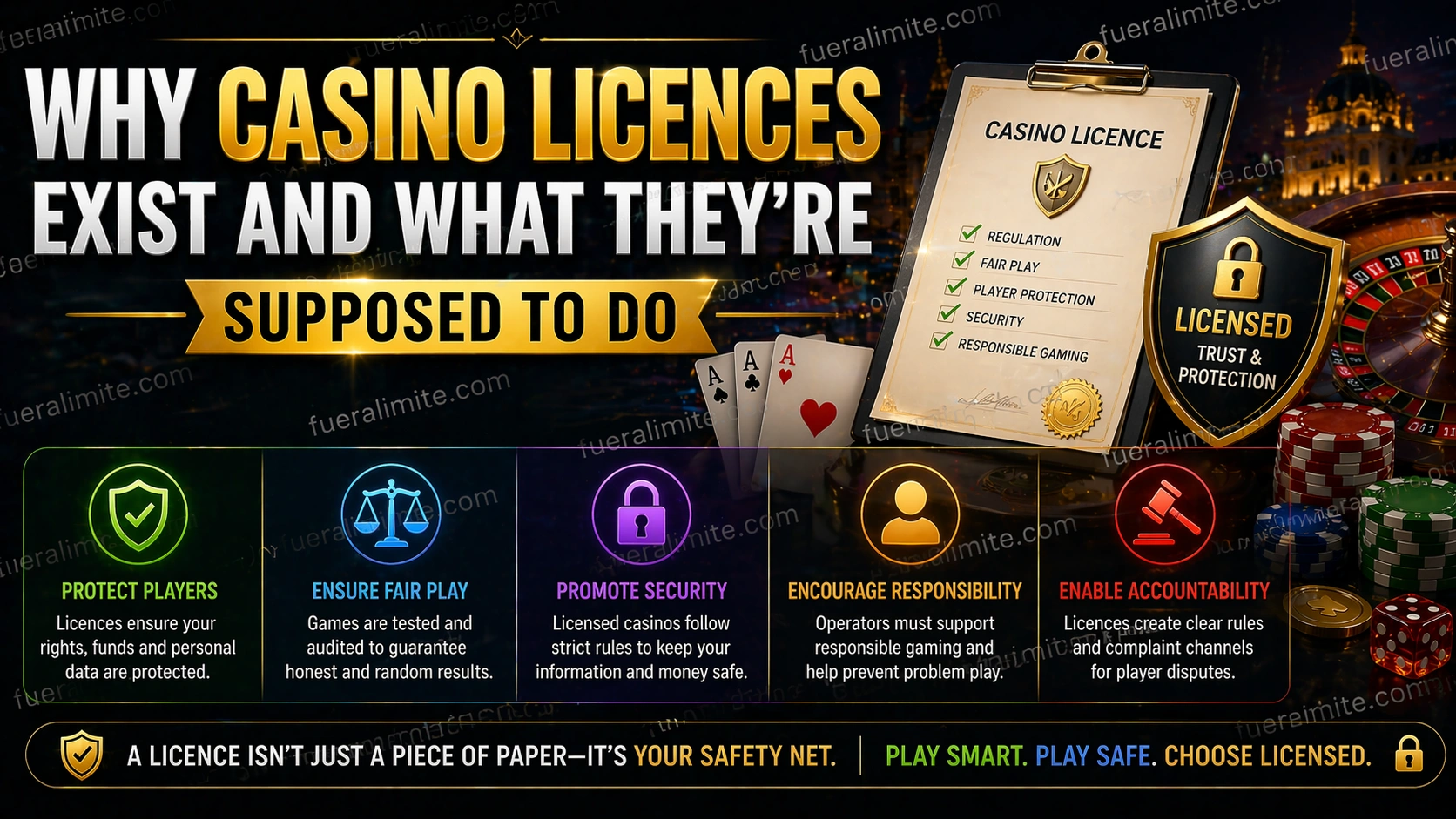
Why Casino Licences Exist and What They’re Supposed to Do
A casino licence is an authorisation issued by a government body or regulatory authority that permits an operator to offer gambling services legally. To get one, the operator has to satisfy that authority on a range of criteria — financial stability, technical integrity of the games, procedures for handling player funds, anti-money laundering protocols, responsible gambling tools, and more.
The theory is that the licence creates a layer of accountability between the operator and the player. If the casino behaves badly, the regulator can investigate, issue sanctions, suspend the licence, or revoke it entirely. The player has somewhere to take a complaint beyond just shouting into a contact form.
The practice varies enormously depending on how seriously the issuing authority takes those responsibilities. Some regulators have substantial investigative capacity, publish enforcement records, and operate genuine complaints processes. Others issue licences primarily as a revenue source and do relatively little active supervision of the operators they’ve authorised.
Understanding which is which is the skill worth developing. For Spanish players in particular, there are several jurisdictions whose licences appear regularly on the platforms available to you, each with its own characteristics.
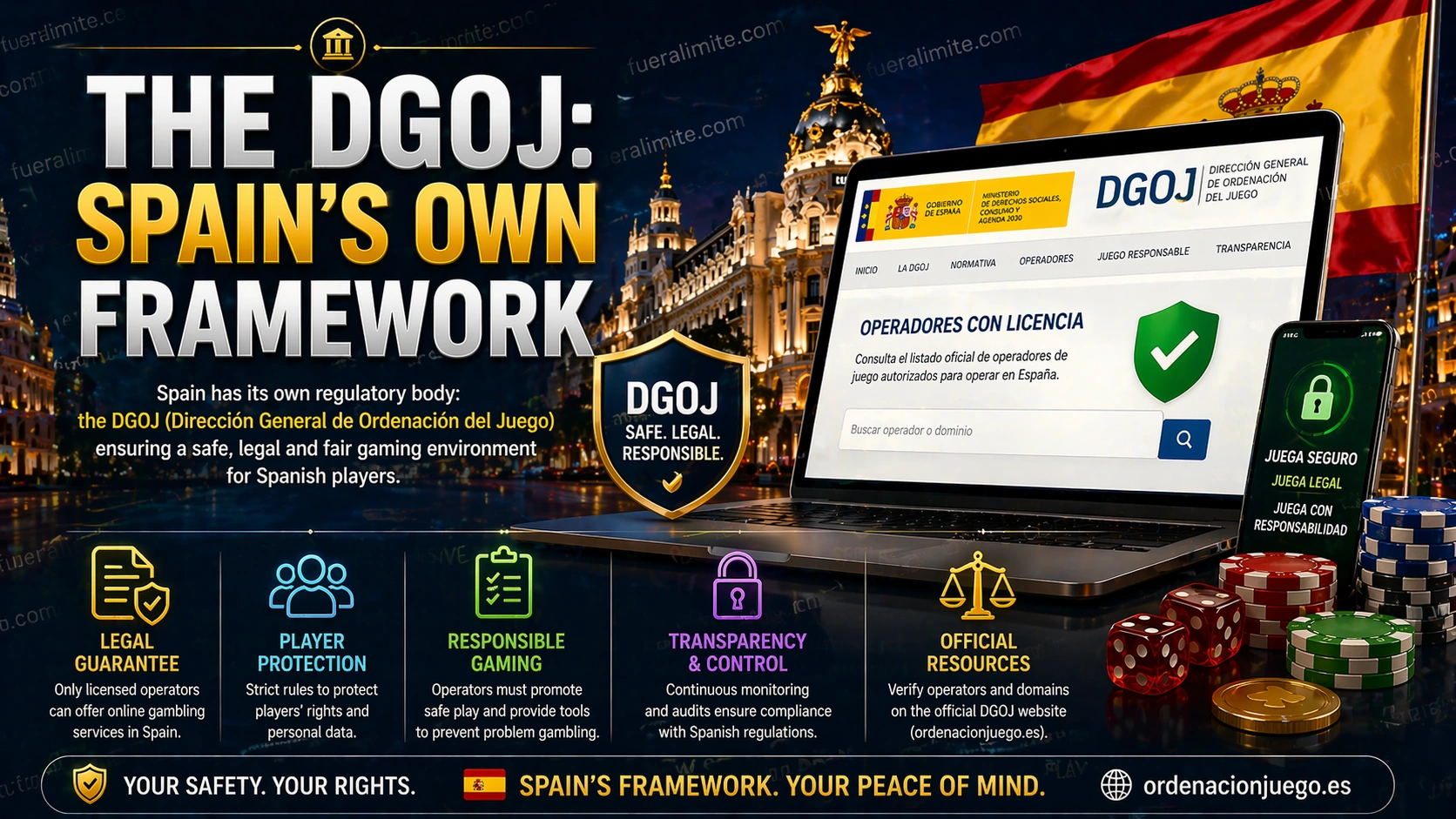
The DGOJ: Spain’s Own Framework
Before getting into international licences, it’s worth being clear on Spain’s domestic regulatory setup. The Dirección General de Ordenación del Juego is the authority that issues licences for operators wanting to legally target Spanish players. A casino with a DGOJ licence operates under Spanish law, with all the protections that implies.
For players, choosing a licensed casino with DGOJ authorisation means access to formal complaints procedures under Spanish jurisdiction, mandatory connection to the RGIAJ national self-exclusion register, games certified by accredited independent laboratories, and segregated player funds. The welcome bonus is capped at €1,000, which is less exciting than the offers on many international platforms, but the trade-off is a higher level of regulatory protection.
The DGOJ register is publicly searchable at ordenacionjuego.es. Two minutes there before registering anywhere tells you exactly whether a platform is authorised to operate in Spain.
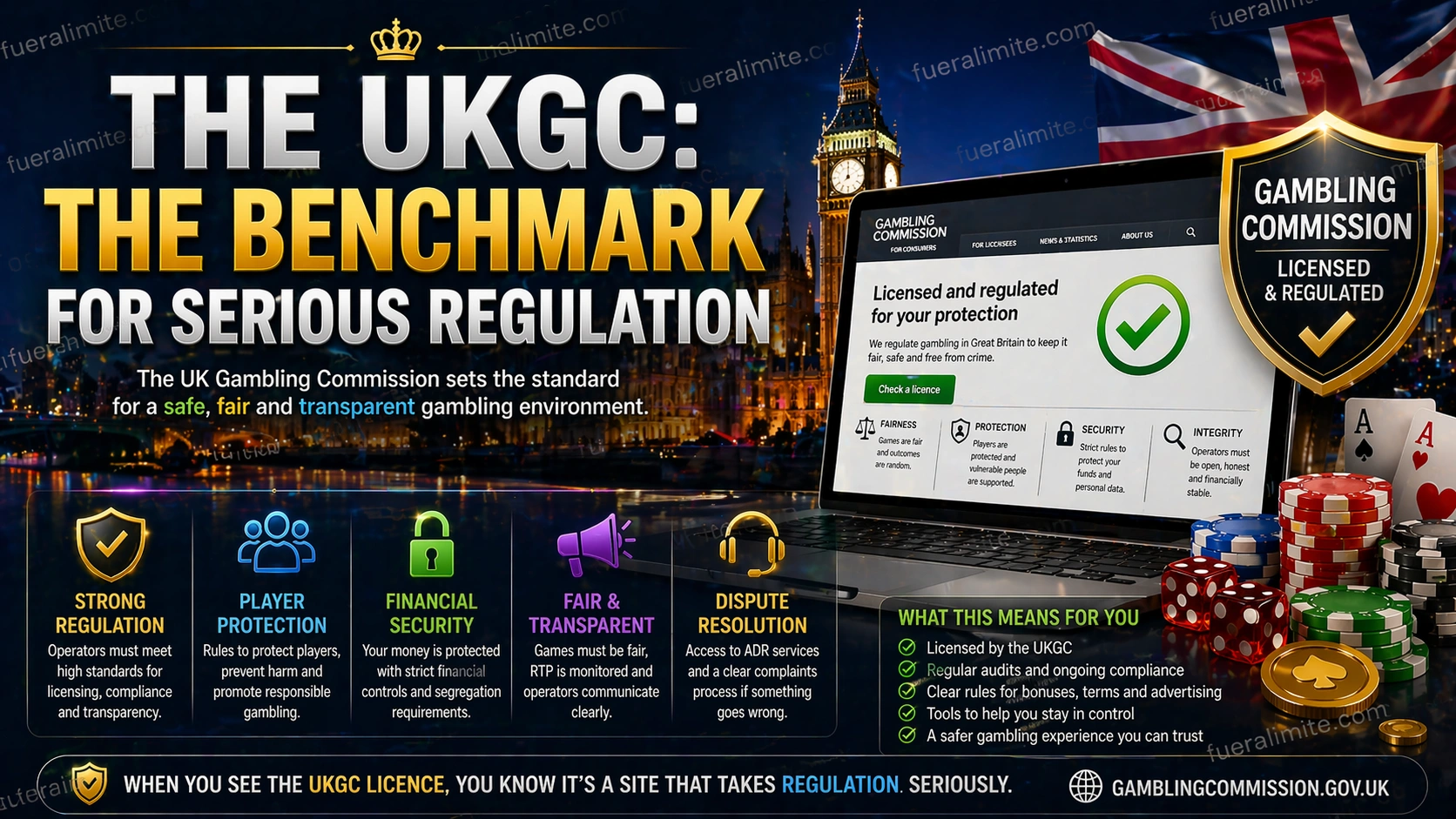
The UKGC: The Benchmark for Serious Regulation
The UK Gambling Commission is widely regarded as the most rigorous gambling regulator in the world. A UKGC licensed casino has passed one of the most demanding vetting processes in the industry and is subject to ongoing active supervision that most other jurisdictions don’t come close to matching.
Getting a UKGC licence requires demonstrating financial soundness, having key personnel pass fit and proper assessments, implementing technical standards for game fairness, maintaining segregated player funds in most cases, operating robust responsible gambling tools, and applying comprehensive anti-money laundering procedures. The cost and complexity of obtaining and maintaining a UK licence is significant — which is why it acts as a genuine quality filter.
The UKGC also has a track record of actually using its enforcement powers. Fines in the tens of millions of pounds for regulatory failures are not unusual. Operators have had licences suspended or revoked for breaches of social responsibility requirements. That enforcement activity is visible in published records on the UKGC website.
For Spanish players, the relevance is that a licensed casino online holding a UKGC licence — even without a DGOJ authorisation — is operating under a serious regulatory framework with genuine consequences for misbehaviour. You don’t have access to the Spanish complaints process, but the UKGC has its own, and it functions.
The most established international operators that serve Spanish players — bet365, William Hill, Betway, Unibet among others — hold UKGC licences alongside their other regulatory authorisations. For Spanish players evaluating international platforms, UKGC licensing is one of the strongest positive signals available.
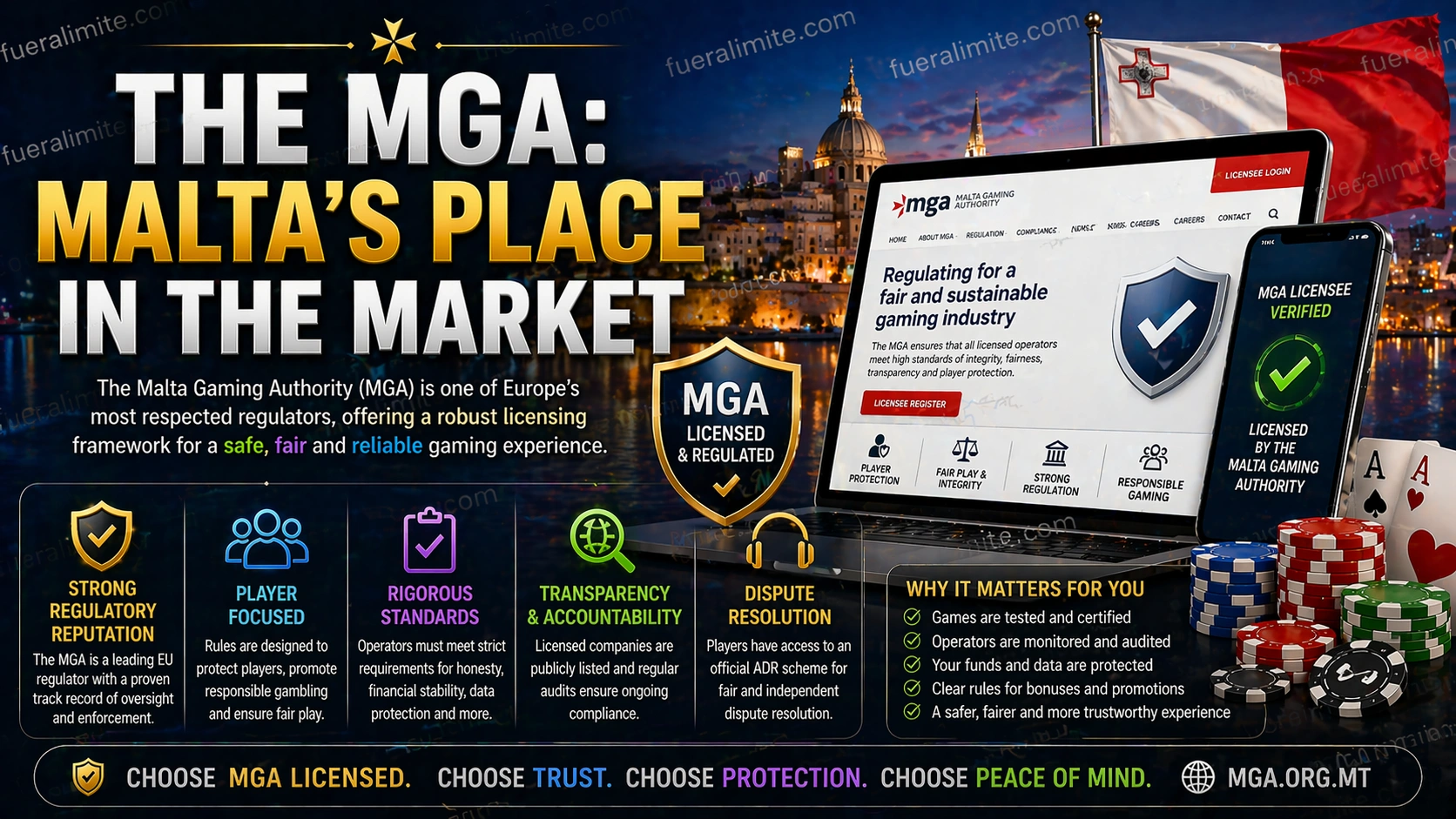
The MGA: Malta’s Place in the Market
The Malta Gaming Authority has been the go-to European licence for online casino operators for over two decades. Malta’s position within the EU, combined with a regulatory framework that’s more accessible than the UK but still substantially more rigorous than offshore alternatives, made it the natural home for a large part of the European online gambling industry.
MGA licensing requires certified games, segregated player funds, responsible gambling implementation, AML compliance, and a fit and proper assessment of owners and key staff. The MGA also operates a formal dispute resolution process — the Player Support Unit — that Spanish players can use if they have an unresolved complaint against an MGA-licensed operator.
The MGA licence covers the operator’s activities across multiple European markets, which is why you’ll see it cited by platforms that serve Spain, Germany, Sweden, Italy, and a dozen other countries from a single Maltese licence. It doesn’t give you access to Spanish consumer law, but it does give you access to a functioning complaints mechanism operated by a real regulatory body.
In 2026, the MGA remains one of the most credible licences for Spanish players using international platforms. The volume of operators it covers means you’ll encounter it frequently, and the standards it applies are meaningful enough to provide genuine assurance about the basic integrity of the platform.
PAGCOR: The Philippine Licence Explained
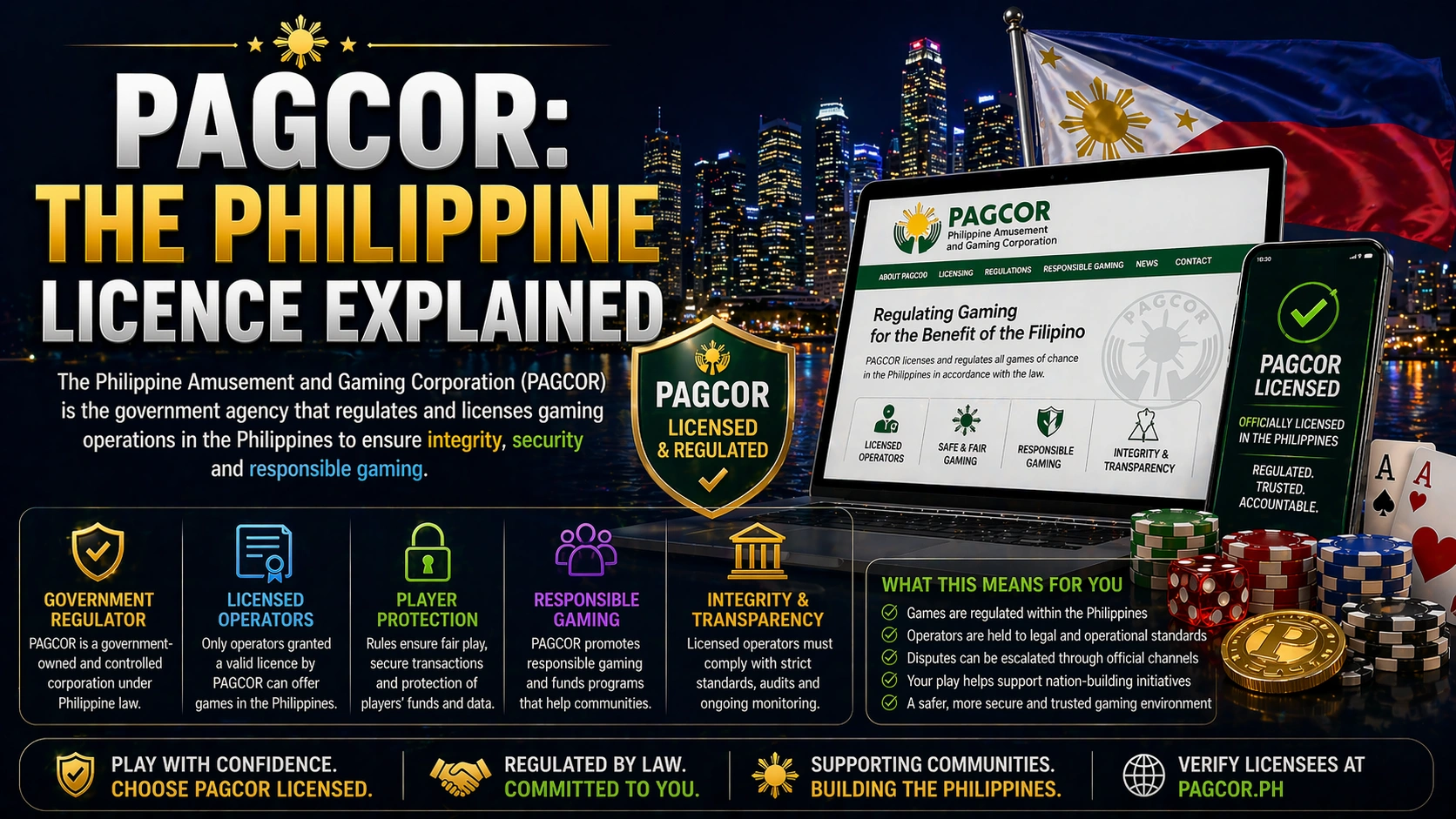
The Philippine Amusement and Gaming Corporation — PAGCOR — is a government-owned authority that both regulates and operates gambling in the Philippines. It also issues licences to international online casino operators through its offshore gaming framework, which is how it becomes relevant to players in Spain and other European markets.
A PAGCOR licensed casino has gone through a formal authorisation process with a government body, which is a step above purely private licensing arrangements. PAGCOR has requirements around capitalisation, technical standards, and operator conduct. It’s a legitimate regulatory authority rather than a mailbox operation.
The practical limitation for Spanish players is distance — in every sense. If you have a complaint against a PAGCOR licensed online casino and it goes unresolved by the operator, accessing the PAGCOR complaints process from Spain is complicated, slow, and not always predictable in outcome. The regulatory culture and consumer protection standards are different from what Spanish players are familiar with, and the remedies available are less certain than through European regulators.
A PAGCOR licensed casino is not a red flag. Several operators with solid reputations and long track records of paying players operate under this licence. But it’s not the same level of accessible protection as a UKGC or MGA licence, and Spanish players using these platforms are relying more heavily on the operator’s own conduct than on the regulator’s oversight.
What distinguishes better PAGCOR licensed casinos from worse ones tends to come from the operator’s track record rather than from the licence itself — years in operation, payment history, community reputation in independent forums, responsiveness of customer support.
Curaçao: The Most Common Licence and the Most Variable
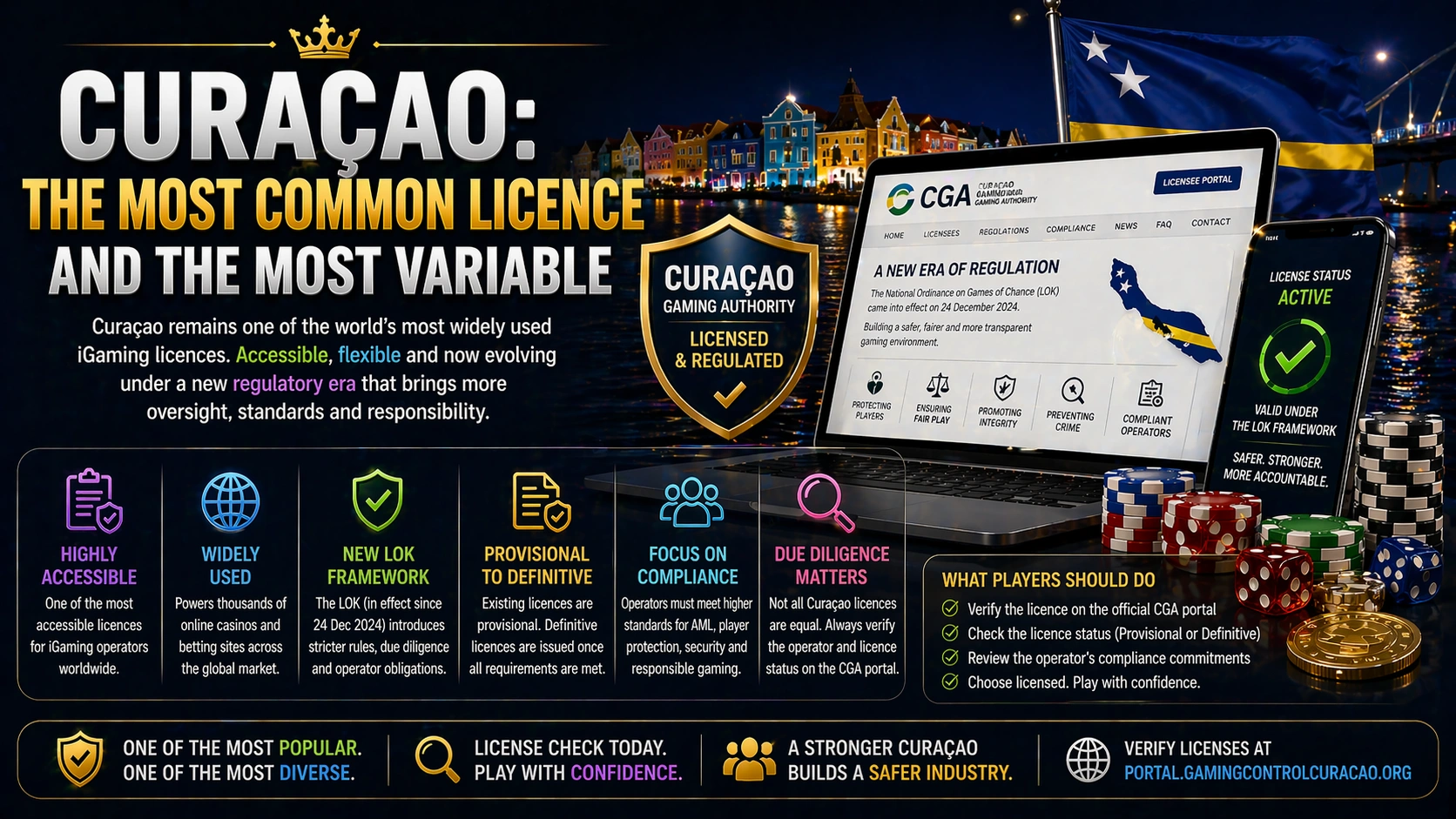
The Curaçao licence is the most widely held in the online casino industry and the one that generates the most questions about what it actually means. The short version: it used to mean very little, and it means somewhat more now after reforms that came into effect progressively from 2023.
The old Curaçao system operated through master licences and sublicences in a way that created significant opacity. The requirements to obtain a licence were low, the ongoing supervision was minimal, and the player complaints process was essentially non-functional for practical purposes. This made Curaçao the default choice for operators who wanted to operate legally in name while avoiding serious regulatory scrutiny.
The reformed framework requires individual licences for each operator rather than sublicences, higher minimum capital requirements, genuine AML procedures, and greater transparency about ownership structures. In 2026, a Curaçao licensed casino operating under the new framework is a more credible proposition than it would have been three or four years ago.
The honest reality is that the Curaçao market is still highly variable. Some operators with Curaçao licences have been running for a decade with excellent payment records and genuine player-first conduct. Others have histories that independent player forums document in considerable detail. The licence itself, even reformed, doesn’t eliminate that variance the way a UKGC or MGA licence does.
For Spanish players, a Curacao licensed casino is a starting point for investigation rather than a conclusion. Check the operator’s history. Look at what experienced players say about their withdrawal experience. See how long they’ve been running. The licence tells you they exist in a regulated framework of some kind. It doesn’t tell you whether that framework meaningfully constrains their behaviour.
Comparing the Main Licensing Jurisdictions
Here’s how the most relevant licences stack up for Spanish players in 2026:
| Licence | Regulator Type | Player Protection Level | Complaints Process | Accessible for Spanish Players |
|---|---|---|---|---|
| DGOJ (Spain) | Government agency | Very high | Yes, via DGOJ | Direct — Spanish law applies |
| UKGC (UK) | Independent statutory body | Very high | Yes, via UKGC/ADR | Good — formal process available |
| MGA (Malta) | Government agency | High | Yes, via MGA PSU | Good — EU framework |
| Gibraltar | Government agency | High | Yes, via Gibraltar RGA | Moderate |
| Isle of Man | Government agency | High | Yes, via GSC | Moderate |
| PAGCOR (Philippines) | Government corporation | Medium | Yes, but limited access | Limited from Spain |
| Curaçao (reformed) | Government agency | Medium | Improving, still limited | Difficult from Spain |
| Anjouan | Government body | Low-Medium | Minimal | Very difficult |
The table reflects the regulatory framework, not individual operator quality. A well-run operator under a weaker licence can outperform a poorly run operator under a strong one in day-to-day practice. But when things go wrong, the licence determines what options you have.
The 24/7 Support Question: Why It Connects to Licensing
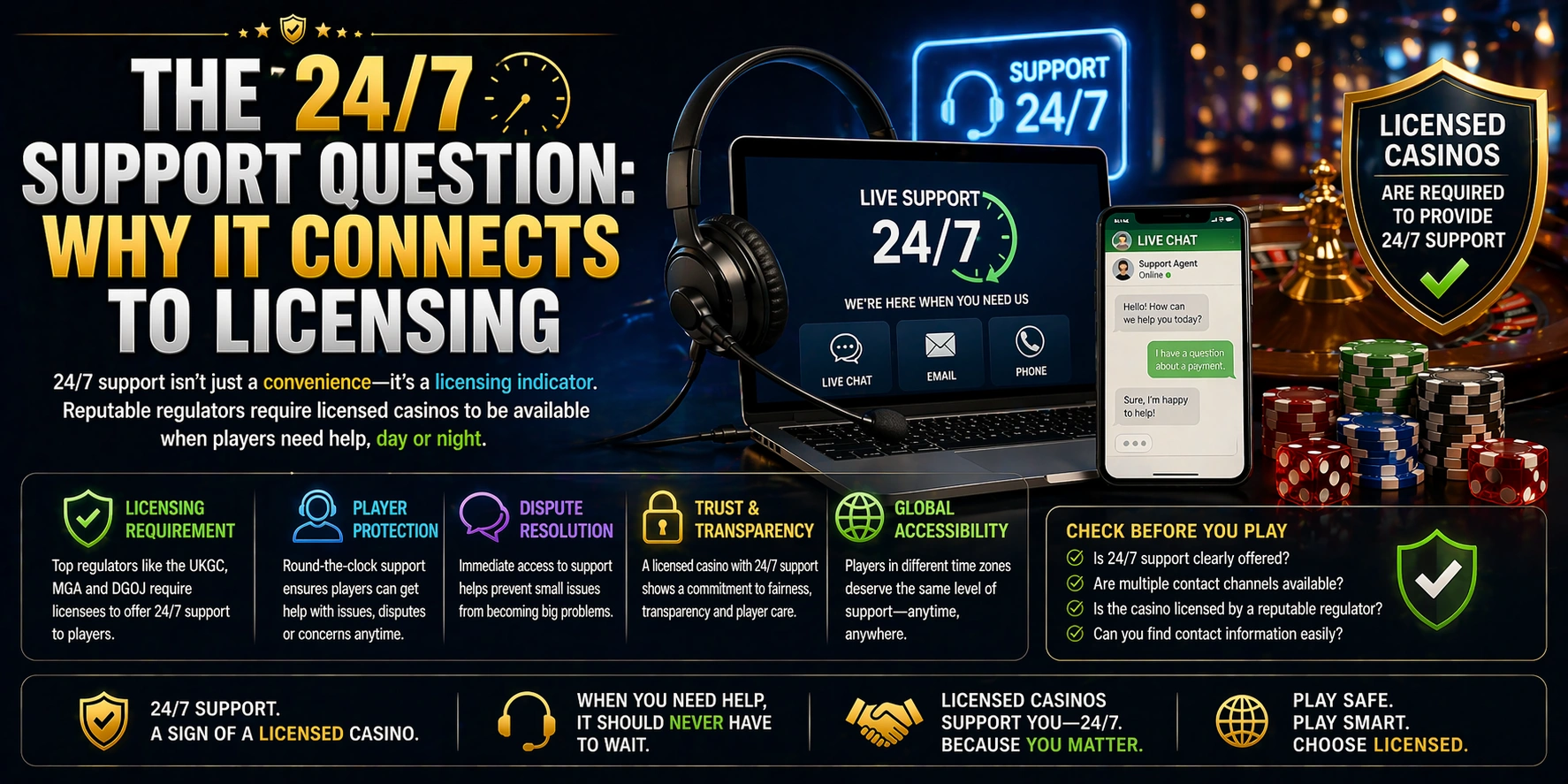
One thing that comes up repeatedly when players evaluate platforms is the quality of customer support — specifically whether a licensed online casino with 24/7 customer support is available when you need it. This connects to licensing more directly than it might seem.
Regulators with serious player protection standards typically require operators to maintain accessible, responsive support channels. The UKGC specifies requirements around complaints handling timeframes. The DGOJ requires Spanish-language support. The MGA has its own standards for operator responsiveness. Weaker licensing jurisdictions tend to have less specific requirements, which is one reason why support quality is often lower on platforms licensed there.
A licensed online casino with 24/7 customer support in Spanish, available via live chat with response times measured in minutes rather than days, is almost always operating under a serious licensing framework. The investment required to run that level of support consistently is substantial, and operators who’ve cut corners on regulatory compliance tend to cut corners there too.
What to look for when assessing support quality before committing to a platform:
- Live chat availability round the clock, not just during European business hours
- Spanish language support as a real option, not just a translated FAQ section
- Response times under three minutes for live chat on typical queries
- A clear, documented complaints procedure that goes beyond “email us and we’ll see”
- Named regulatory contact details for escalation if the operator’s own process doesn’t resolve your issue
How to Verify a Casino Licence Before You Deposit
Claiming to have a licence and actually having one are not the same thing. Some platforms display fake or expired licence numbers in their footer. The only way to know for certain is to verify directly with the issuing authority.
For each major jurisdiction:
- DGOJ: Search the operator register at ordenacionjuego.es. Enter the casino name and check for an active authorisation in the relevant gaming category
- UKGC: The public register at gamblingcommission.gov.uk lets you search by operator name or licence number. You can see the licence status, conditions attached, and any enforcement actions
- MGA: The authorised persons register at mga.org.mt covers all active MGA licences. You can see the licence type, status, and history
- PAGCOR: The PAGCOR website lists licensed operators, though the interface is less user-friendly than the European regulators
- Curaçao: The gaming authority’s website has a licence verification tool. The casino’s licence number should be visible in their footer and verifiable in the official database
The process takes about two minutes per platform. Doing it before depositing is significantly more useful than doing it after something has gone wrong.
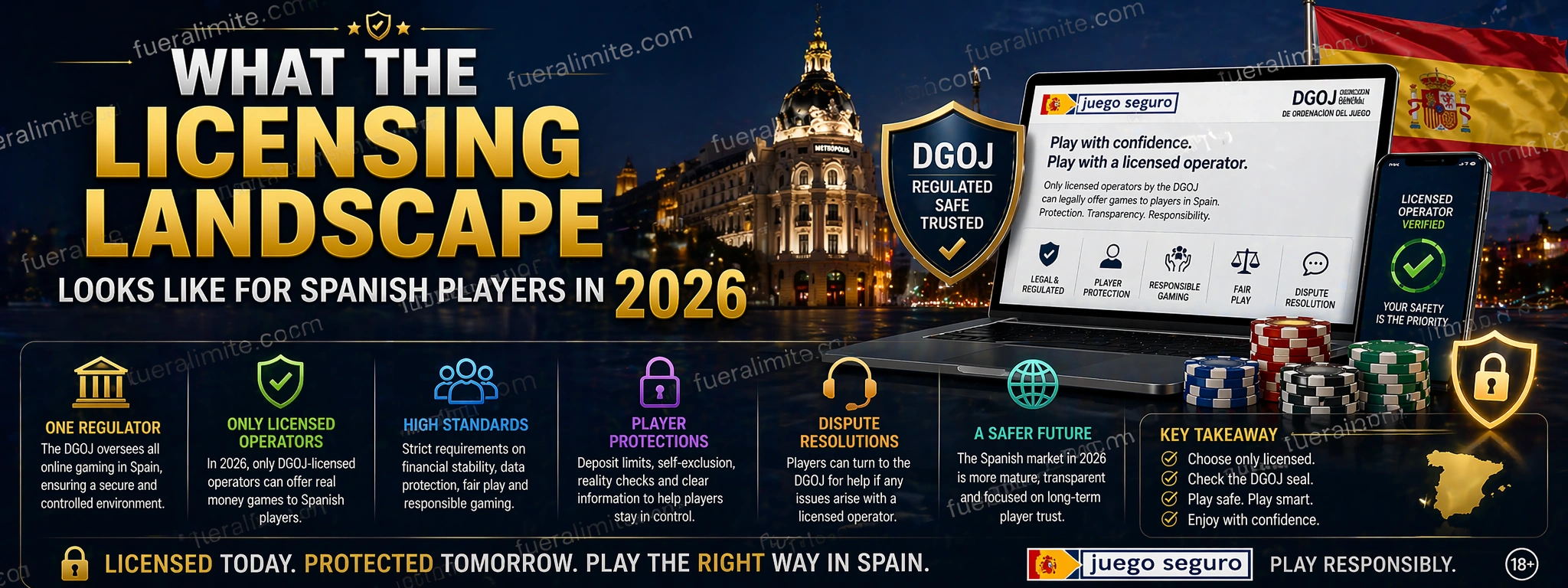
What the Licensing Landscape Looks Like for Spanish Players in 2026
The structure of the market in 2026 creates a practical choice for Spanish players. On one side, the DGOJ-licensed domestic market offers strong protections within a legal framework specifically designed for Spain, with the trade-offs of smaller bonuses and sometimes more limited game libraries. On the other, a large international market offers wider choice, bigger promotions, and access to platforms from around the world — with protections that range from excellent (UKGC, MGA) to moderate (PAGCOR, reformed Curaçao) to limited (some smaller jurisdictions).
Neither side is uniformly better. A player who prioritises legal certainty and maximum protection will find what they need in the DGOJ-licensed market. A player who wants access to a wider range of games, better odds on sports markets, or promotional offers not subject to Spanish caps can find credible international options — provided they focus on platforms licensed by serious regulators rather than treating all international licences as equivalent.
The key insight is that licence quality is a spectrum, and the specific jurisdiction matters as much as the existence of a licence. A licensed online casino with a UKGC or MGA authorisation is a fundamentally different proposition from one operating under a less demanding framework. The word “licensed” by itself doesn’t do the work that many players assume it does.
Practical Summary: How to Use This Information
Knowing all of the above is useful. Using it efficiently when you’re actually evaluating platforms requires turning it into a practical process. Here’s a short version of what that looks like:
Checking a new platform before depositing:
- Find the licence information in the footer — note the jurisdiction and licence number
- Verify the licence is active in the official register of that jurisdiction
- If DGOJ licensed, check ordenacionjuego.es for confirmation
- If UKGC or MGA licensed, use the respective public registers
- Look up the operator name in independent player forums for payment track record
- Check that support is accessible in Spanish and available when you need it
- Read the withdrawal terms before depositing, not after your first win
This takes about ten minutes. It’s the single most useful thing you can do before committing money to any platform, and it filters out a substantial portion of the problematic operators in the market before you’ve risked anything.
FAQ
Does a casino need a DGOJ licence to legally accept Spanish players?
Yes, from the operator’s perspective. Without DGOJ authorisation, accepting Spanish players is illegal for the operator under Spanish law. For the player, accessing the site isn’t illegal, but the legal protections available in a dispute are significantly reduced.
Is a UKGC licence valid for Spanish players?
The UKGC licence doesn’t authorise operation in the Spanish market specifically, but it does mean the operator meets one of the world’s highest regulatory standards. Spanish players using UKGC-licensed platforms have access to the UKGC’s complaints process and ADR schemes, which are functional and accessible.
What’s the difference between a PAGCOR licensed casino and an MGA licensed casino for me as a player?
The main practical difference is in the accessible complaints process. The MGA’s Player Support Unit is specifically designed to be accessible to European players and operates within a framework Spanish players can navigate. PAGCOR’s equivalent process is more difficult to access from Spain and operates under different consumer protection norms.
Can I trust a Curaçao licensed casino in 2026?
The reformed framework is more credible than the old one, but the variation between operators is still high. A Curaçao licensed casino with five or more years of documented good payment history is a more credible proposition than a recently launched one with no track record. The licence alone doesn’t answer the question — the operator’s history does.
What should I do if I have a complaint against a licensed casino that isn’t resolving it?
Start with the operator’s formal complaints procedure. If unresolved within the timeframe specified in their terms, escalate to the relevant regulator. For DGOJ-licensed casinos, that’s the DGOJ. For MGA-licensed casinos, the MGA’s Player Support Unit. For UKGC-licensed casinos, the relevant Alternative Dispute Resolution scheme listed in their licence conditions. Document everything in writing from the beginning.
Is a licensed casino automatically safe?
No. Licensing provides a regulatory framework and accountability mechanism. It doesn’t guarantee that every operator within that framework behaves well all the time. The combination of a credible licence, a track record of player-positive conduct, transparent terms, and accessible support is the fuller picture.